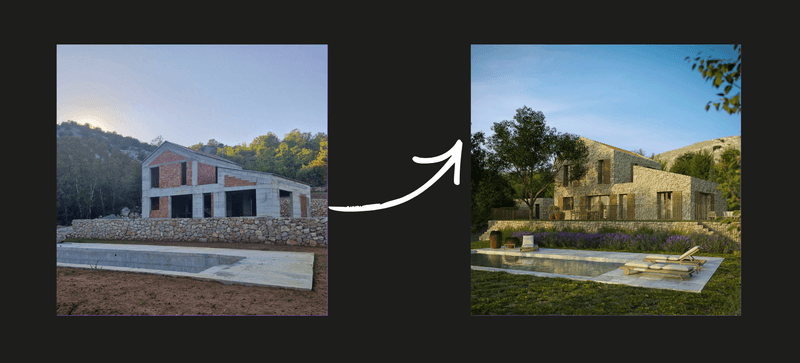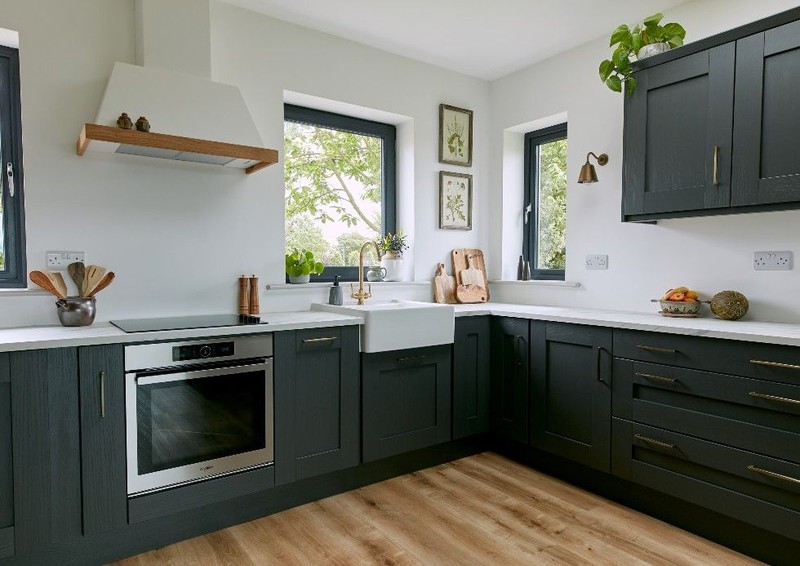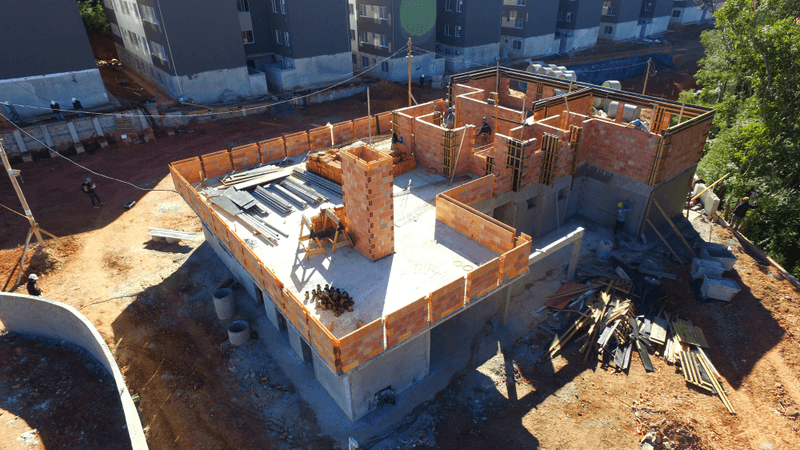
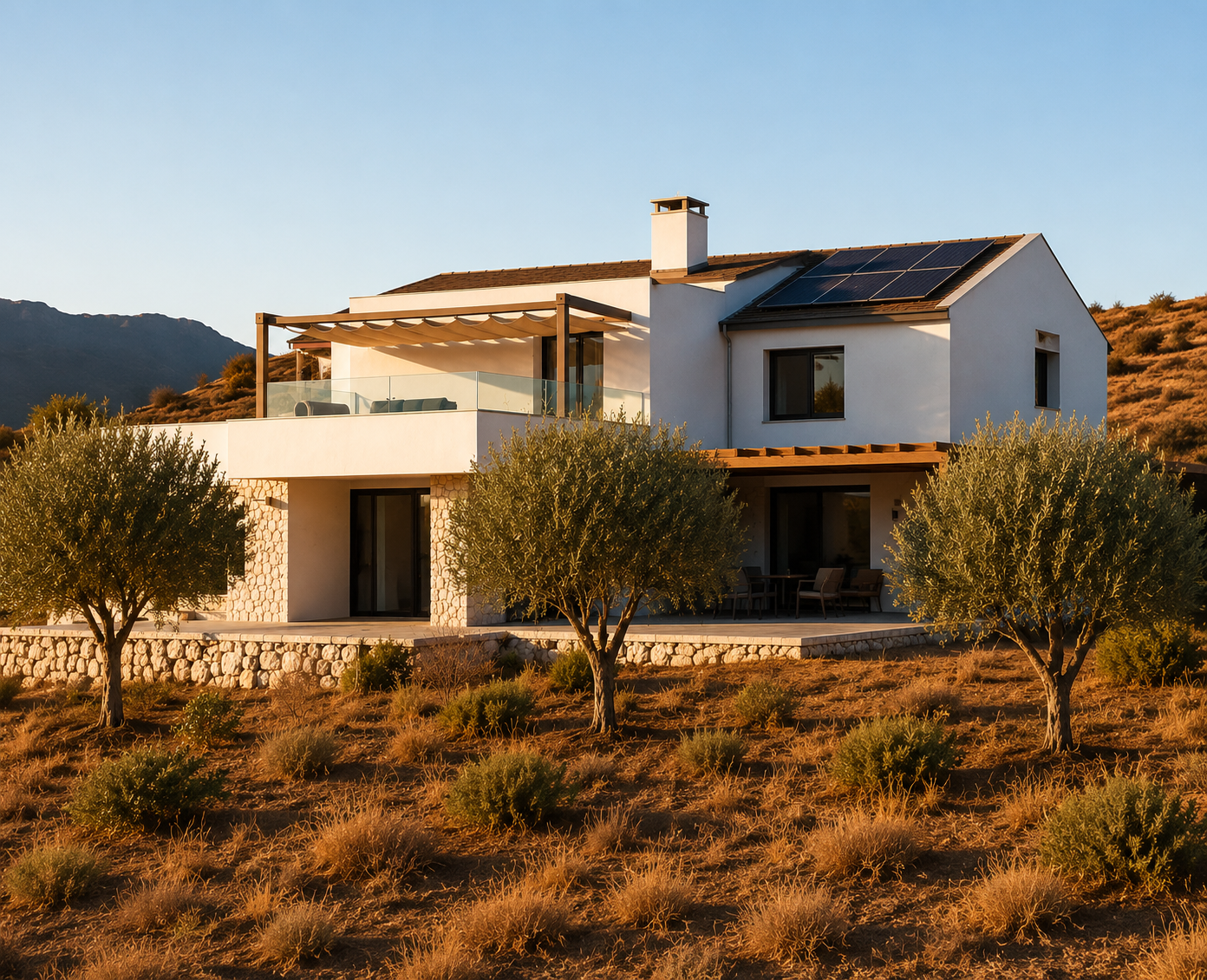
Smart Design First. Technology second. - the biggest energy savings come from decisions made before a single brick is laid.
Introduction
As an architect, I have always been fascinated by one question:
How can we create houses that make the best possible use of both space and nature?
A house should not fight against the climate around it. It should work with the sun, wind, shade and landscape to create a comfortable living environment while using as little energy as possible.
This philosophy led me to study sustainable architecture principles, including the MIT Sustainable Building Design program. One lesson stood out above all others: the biggest energy savings are usually achieved not by adding expensive technology, but by making smarter design decisions from the very beginning.
Many people assume that sustainable architecture starts with solar panels or heat pumps. In reality, it starts long before that. The position of the house on the plot, the orientation of each room, the building's shape, the location of windows and the way the surrounding landscape is designed all have a significant impact on how much energy the house will consume over the next 50 years.
Once these decisions are made, they are difficult or impossible to change without major reconstruction. That is why they deserve more attention than they usually receive.
For homeowners, sustainable design offers much more than lower electricity bills. A well-designed house also provides:
-
Lower heating and cooling costs
-
Better thermal comfort throughout the year
-
Less dependence on air conditioning
-
More natural daylight
-
Better indoor air quality
-
Higher property value
-
Lower maintenance costs
-
A smaller environmental footprint
Perhaps the most surprising fact is that many of the biggest energy savings cost absolutely nothing, provided they are considered during the concept design stage.
Reference house used for the calculations
-
120 m² family house
-
Location: Podgorica, Montenegro
-
Family: four people
-
Electricity price: €0.15/kWh
-
Typical annual heating and cooling demand: approximately 12,000 kWh
About the calculations. The figures in this guide are based on a representative 120 m² family house in Podgorica and are realistic estimates, not exact predictions. Actual performance depends on the local microclimate, orientation, construction quality, occupancy, user behaviour, energy tariffs and the efficiency of installed systems. The purpose is to compare the relative impact of each strategy and help homeowners make better-informed decisions. Savings from separate measures must not be added mechanically because many measures overlap.
Part 1: Free Design Decisions
The highest-return measures are usually decided before construction begins. They rely on good architecture, not expensive equipment.
1. Proper Orientation of the House
One of the first decisions an architect makes is where to position the house on the plot. In Montenegro, the main living façade and the most useful glazed areas will often benefit from facing south or south-west, while the exact answer must also respond to views, neighbouring buildings, access, topography and local winds.
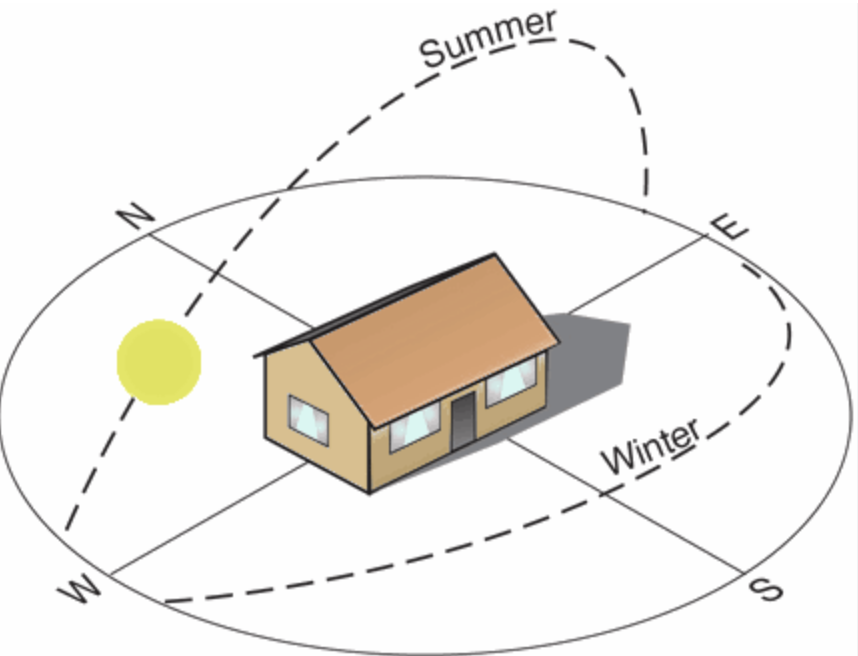
During winter, when the sun is lower in the sky, sunlight can penetrate deep into living spaces and provide free heating for several hours. During summer, the sun is higher, so properly sized overhangs, balconies or pergolas can block much of the direct sunlight before it reaches the windows.
The aim is not to force every house into one rigid direction. It is to find the best balance between useful winter sunlight, summer protection, views and the practical realities of the site.
Why does it save energy? The sun is a free source of heat. Correct orientation reduces winter heating demand and makes summer overheating easier to control. The building itself becomes part of the climate-control strategy instead of relying entirely on machinery.
Why is this particularly important in Montenegro? Montenegro has abundant sunshine, with particularly strong solar exposure in Podgorica and along the coast. Because winters are relatively mild, passive solar gains can provide a meaningful share of the heat a home needs.
| Additional cost | Estimated saving | Payback |
|---|---|---|
| €0 | 840 kWh/year (~€126) | Immediate |
2. Orient Each Room According to Its Function
Correctly positioning the house is only the first step. The next decision is placing each room where the available sunlight best matches how and when that room is used.
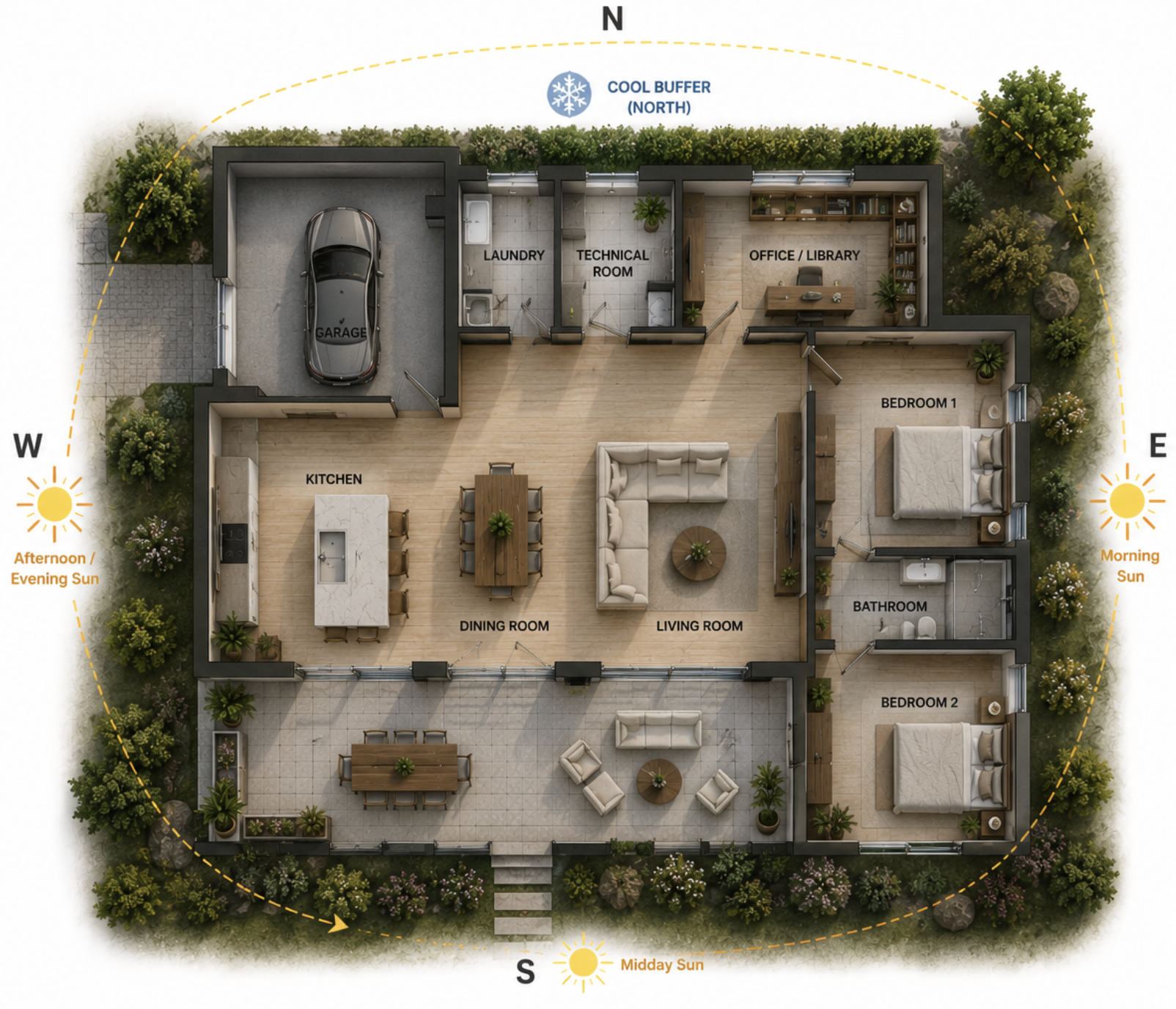
A living room usually performs well to the south or south-west. A north-facing home office receives soft, even daylight with less screen glare and less overheating. Bedrooms often benefit from gentle eastern morning sun, while garages, storage, laundry and technical rooms can form a cooler buffer on the north.
For families who enjoy outdoor dining, a south-west terrace is often ideal for afternoon and evening use. A pergola with climbing plants, a roof overhang around 1.8–2.2 m deep, or adjustable timber screens can keep it comfortable during the hottest months.
Why does it save energy? Rooms remain closer to the temperature and lighting conditions they need. Living areas gain free winter warmth, offices need less cooling, and naturally bright rooms need less electric lighting.
Why is this particularly important in Montenegro? The climate allows outdoor spaces to be used for much of the year. A thoughtful layout helps residents enjoy that advantage instead of fighting intense afternoon sun with air conditioning.
| Additional cost | Estimated saving | Payback |
|---|---|---|
| €0 | 720 kWh/year (~€108) | Immediate |
3. Smart Space Planning and Compact Building Design
Sustainable architecture makes every square metre work harder. Good planning groups rooms into logical zones and removes oversized hallways, unnecessary corridors, awkward leftover corners and excessively large staircases.
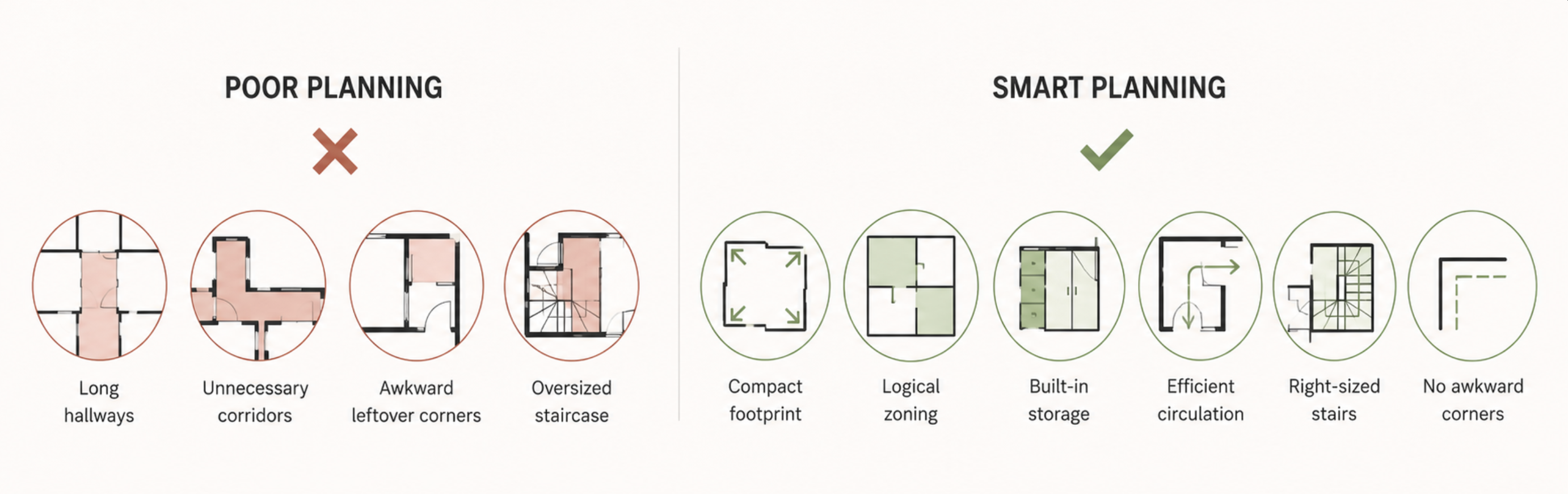
Service spaces such as a garage, laundry, storage and technical room can be grouped on the north as a thermal buffer. A simple rectangular form usually needs less façade, roof, waterproofing and structural complexity than a fragmented form with many projections.
A well-designed 100–110 m² house can function better than a poorly planned 140 m². Building only the space your family truly needs is one of the most sustainable design decisions you can make.
Why does it save energy? Every unnecessary square metre needs materials, heating, cooling, lighting, furnishing and maintenance. A compact form also exposes less external surface to the weather.
Why is this particularly important in Montenegro? With construction costs rising, removing even 8–10 m² of waste can save a substantial amount before energy savings are counted.
Example: If better planning reduces the house size from 140 m² to 120 m² while maintaining the same functionality.
| Construction cost | Annual saving | Payback |
|---|---|---|
| Saves approximately €30,000–40,000 | ~500–700 kWh/year (€75–105) | Immediate |
4. Window Placement for Cross Ventilation
Cross ventilation means placing windows or doors on different sides of the house so fresh air can flow naturally through the rooms. Simply adding windows isn't enough. The architect must consider the direction of prevailing winds, the size and position of openings, the internal layout, and even the placement of furniture to create an effective airflow.
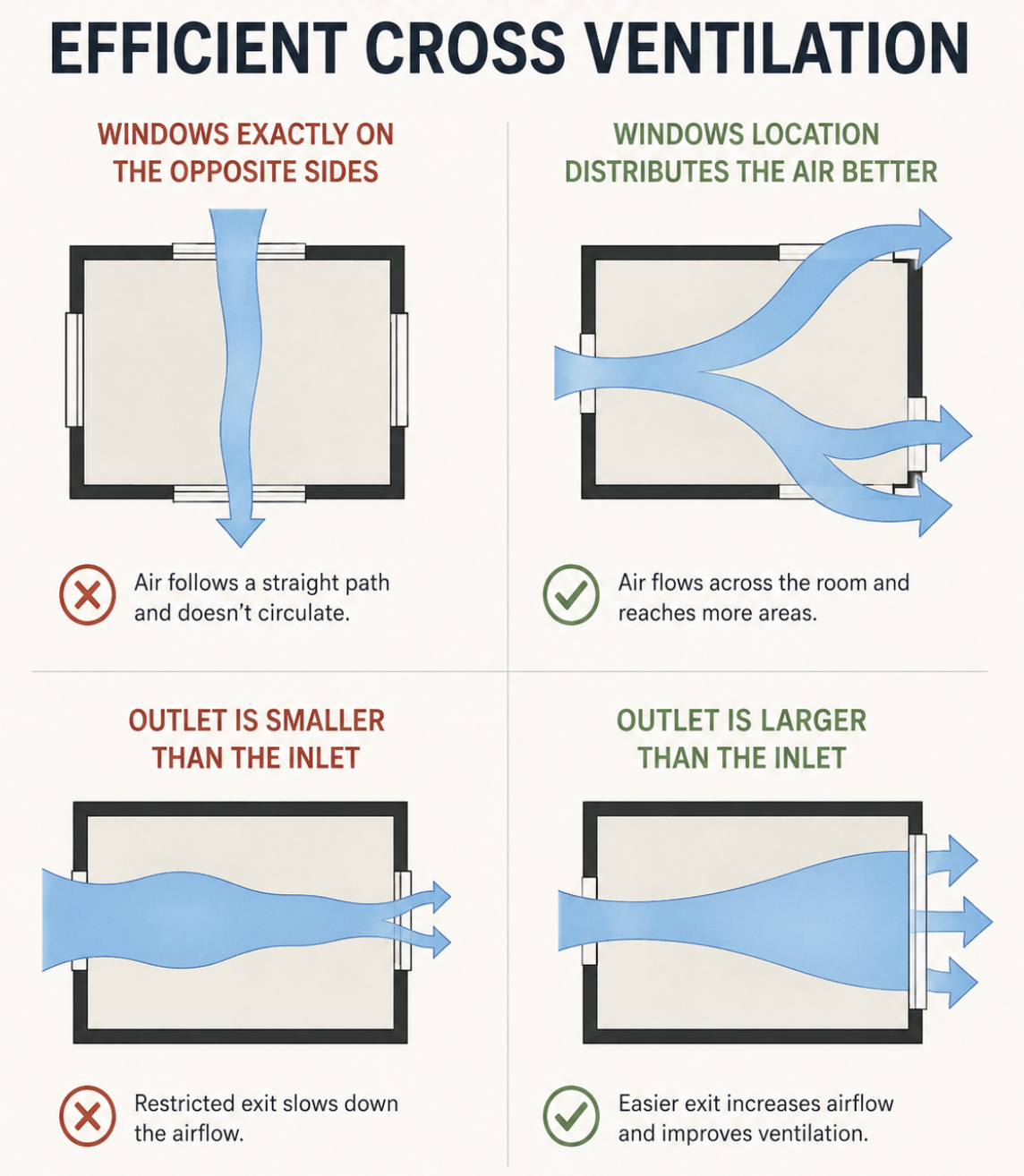
During summer, cooler evening air can flow through the house and carry away the heat stored during the day. Windows placed higher up also help release warm air, making the home more comfortable without relying as much on air conditioning.
Why does it save energy? Moving air makes people feel cooler and removes accumulated indoor heat. During spring, autumn and many summer evenings, this can delay or replace air-conditioning use.
Why is this particularly important in Montenegro? Coastal sea breezes and cooler evening air in many regions are valuable free cooling resources.
| Additional cost | Estimated saving | Payback |
|---|---|---|
| €0–€300 | ~500 kWh/year (~€75) | Immediate to 4 years |
5. Daylighting Design
Daylighting means designing the house so natural daylight reaches as much of the interior as possible, reducing the need for artificial lighting. Unlike passive solar heating, the goal is to maximise useful daylight, not to let more heat enter the building.
Achieving this involves much more than simply making windows larger.
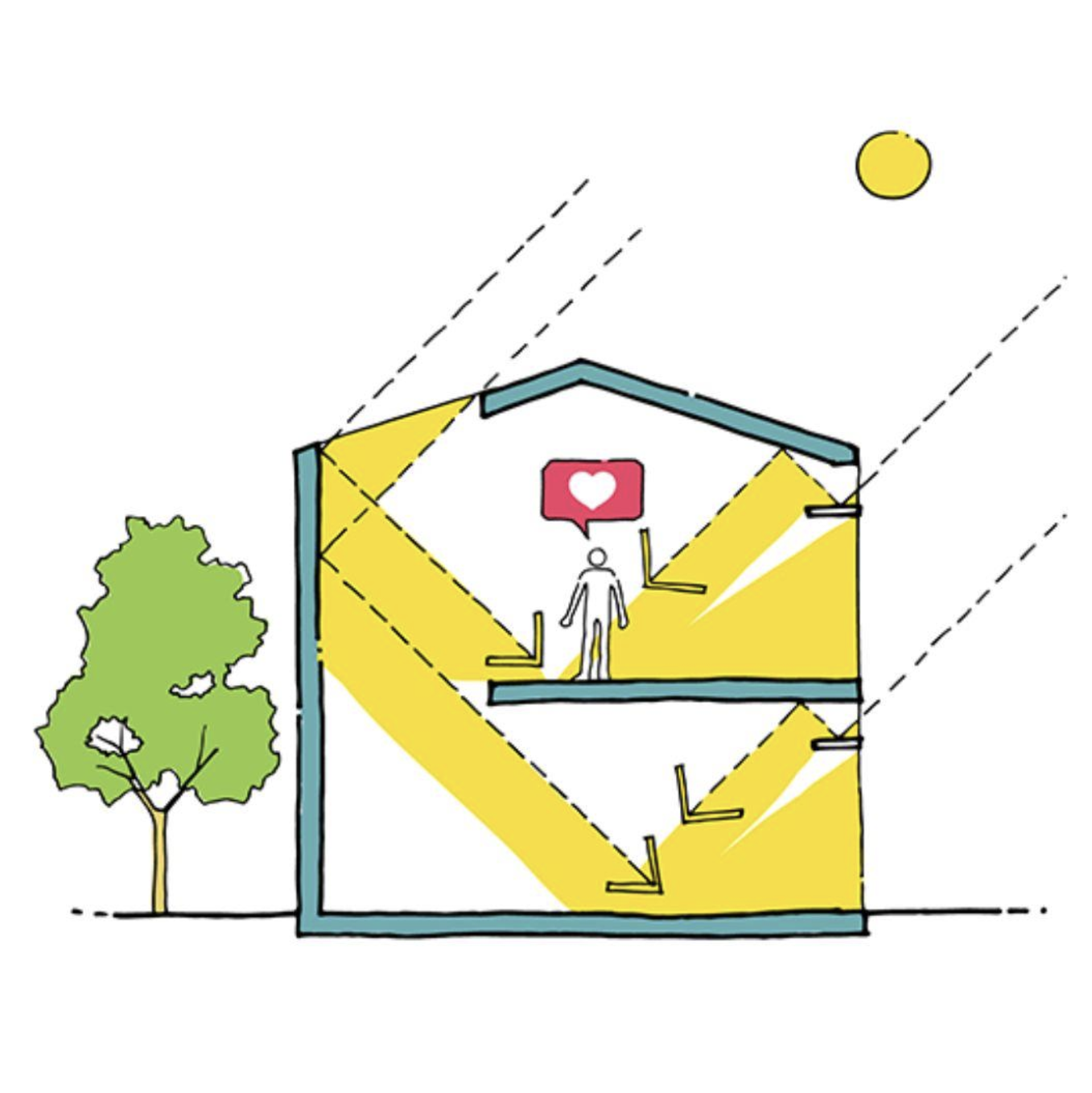
Window height, room depth, ceiling height, interior colours, external obstructions and the orientation of each room all affect how deeply daylight penetrates. Higher windows allow light to reach further into the space, while light-coloured walls and ceilings reflect daylight more evenly, making rooms feel brighter without increasing energy use.
Why does it save energy? Every hour of useful daylight reduces electric-lighting demand. Better daylight also improves visual comfort, and avoiding unnecessary artificial lighting slightly reduces internal heat gains in summer.
Why is this particularly important in Montenegro? Montenegro has abundant sunshine. Thoughtful daylighting uses that resource while shading and careful window placement prevent glare and overheating.
| Additional cost | Estimated saving | Payback |
|---|---|---|
| €0–€500 | ~300 kWh/year (~€45) | Immediate to 11 years |
6. Roof Overhangs, Pergolas and Covered Terraces
Roof overhangs, balconies, pergolas, covered terraces and external screens prevent the sun from overheating the house by blocking its rays before they reach the windows. This is much more effective than relying on blinds or curtains inside, because once sunlight passes through the glass, much of its heat is already trapped indoors. The size and position of these shading elements should be designed specifically for the orientation of each façade, not chosen only for their appearance.
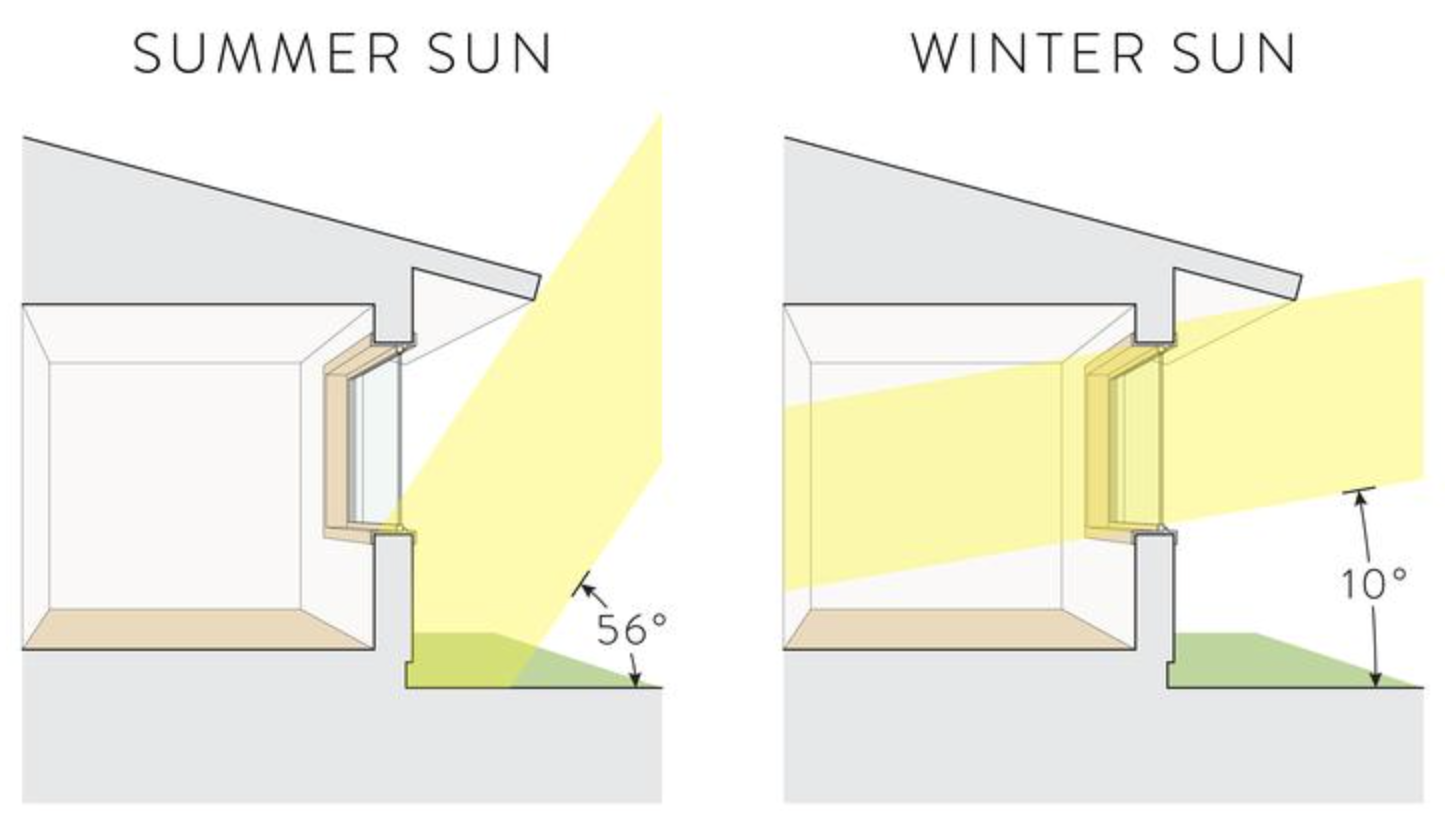
West-facing windows are more challenging because the afternoon sun is much lower and shines directly into the house. In these cases, vertical fins, adjustable shutters, pergolas with climbing plants, trees or deep side screens usually provide better protection than horizontal overhangs alone.
A covered terrace provides another important benefit. It creates a comfortable outdoor living space for much of the year, allowing the family to spend more time outside. As a result, many homeowners find they need less indoor living space, reducing both construction costs and long-term energy use.
Why does it save energy? External shading stops solar heat before it enters the building. Internal curtains reduce glare, but much of the heat has already crossed the glass.
Why is this particularly important in Montenegro? Summer radiation is intense in Podgorica and on the coast, while the long shoulder seasons make covered outdoor space especially valuable.
| Additional cost | Estimated saving | Payback |
|---|---|---|
| €1,000–€5000 (depending on the size) | ~400 kWh/year (~€60/year) + potential construction savings of €7,500–20,000 if a covered terrace allows the indoor living area to be reduced by 5–10 m² | 13–42 years on energy alone |
7. Trees and Landscape Design as Natural Climate Control
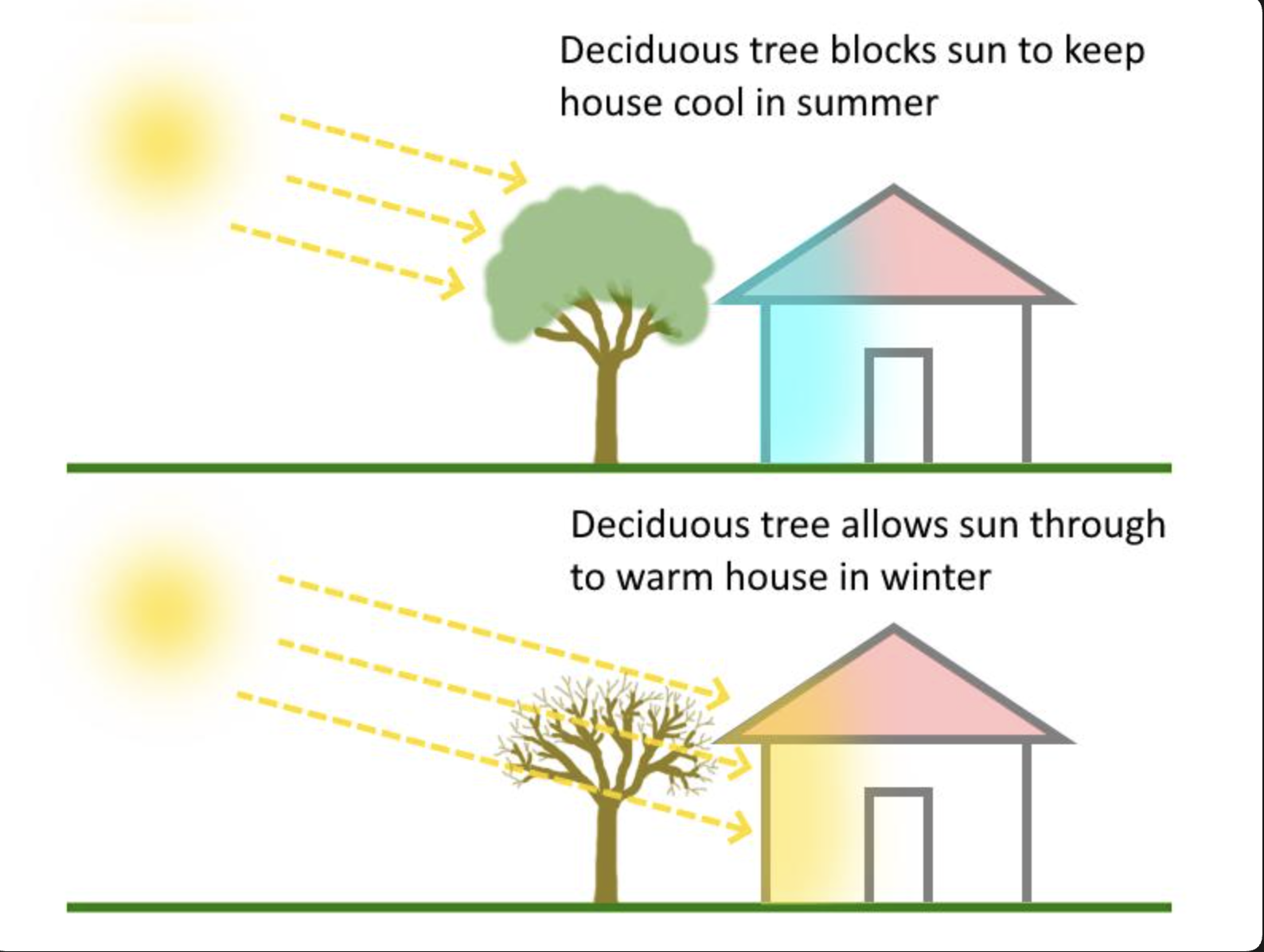
Landscape is part of the environmental design, not an afterthought. Deciduous trees on the south and west provide summer shade and admit winter sun after their leaves fall. Evergreens can reduce exposure to cold northern winds.
Plants cool the surrounding microclimate by providing shade and releasing moisture into the air through evapotranspiration. As a result, vegetated surfaces remain much cooler than bare soil or dark paving, which absorb heat during the day and slowly release it after sunset.
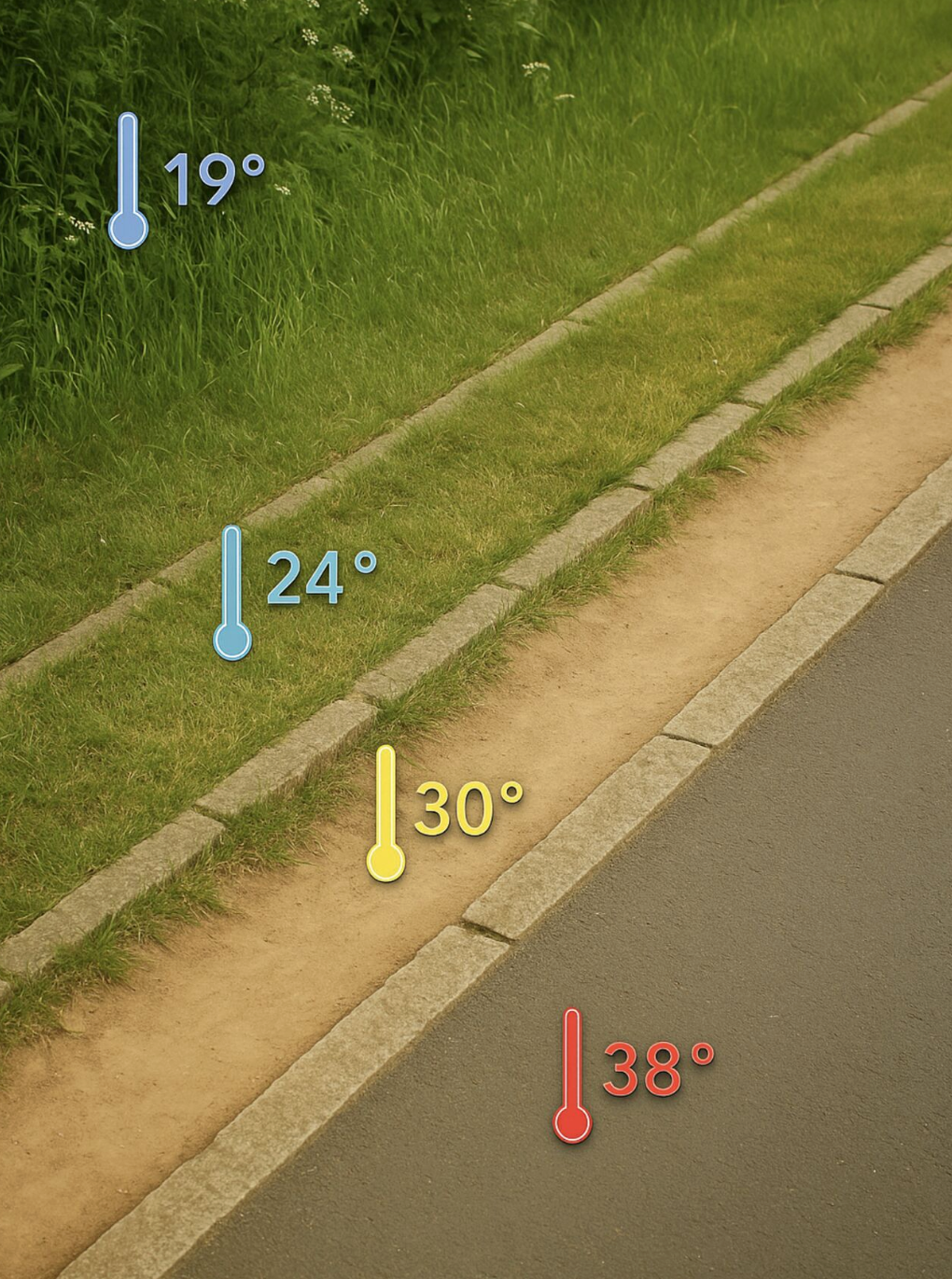
Why does it save energy? Shade keeps the building cooler by blocking the sun before it heats the walls, roof and windows. Trees also cool the surrounding air by releasing moisture through their leaves, creating a naturally cooler microclimate. As shown above, grass and vegetation can be 10–20°C cooler than asphalt on a hot summer day, helping keep the home cooler and reducing the need for air conditioning.
Why is this particularly important in Montenegro? Long sunny summers make western shade valuable, while many coastal and exposed sites also need protection from strong winds and salt.
| Additional cost | Estimated saving | Payback |
|---|---|---|
| €300–€700 for initial planting | ~250 kWh/year (~€38) | 15–20 years |
Part 2: Optimising the Building Envelope
Once the concept is right, the walls, roof, windows and junctions must control heat, air and moisture consistently.
8. Choosing the Right Façade Colour and Materials
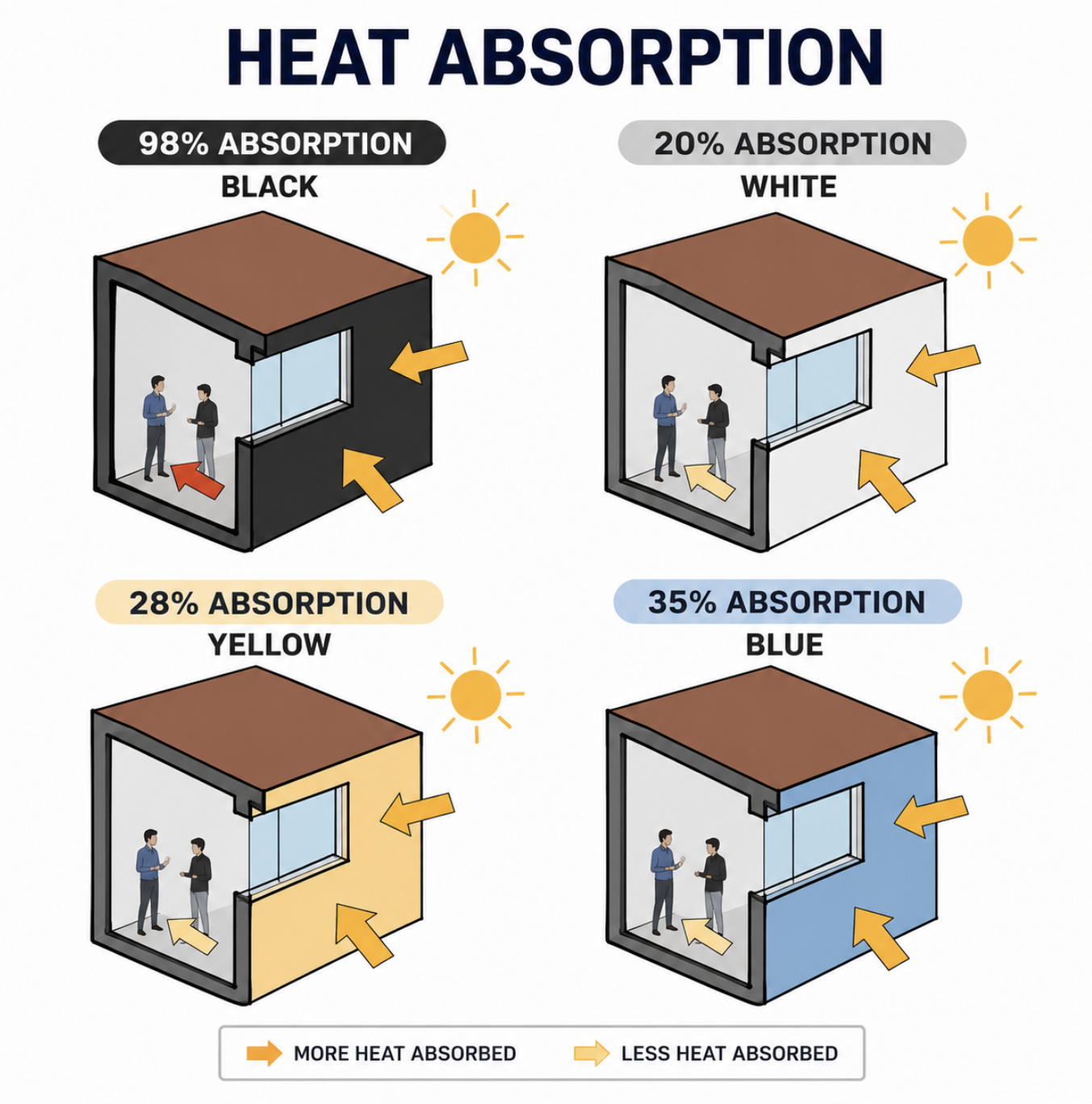
The façade is the outside skin of the house. Its colour and material affect how hot the outside wall becomes in the sun and how much of that heat eventually reaches the rooms inside.
Light colours (white, cream and light beige) bounce more sunlight away from the house. On a sunny summer day, a pale wall can be 10–15 °C cooler than a dark wall. For most family houses, a light-coloured rendered finish over a continuous layer of insulation is the best-value choice.
Stone needs a little more explanation. Stone is heavy, so it warms up and cools down slowly. This can help smooth out temperature changes, but stone is not a substitute for insulation. A better solution is to place proper insulation behind the stone and include drainage so rainwater cannot become trapped.
A ventilated façade has two skins with a narrow air gap between them. The sun heats the outer layer, but the hot air in the gap rises and escapes before much of that heat reaches the main wall. Excellent in sunny climates, though more expensive than a standard rendered façade.
Why is this particularly important in Montenegro? Montenegrin houses face strong summer sun, periods of heavy rain and, near the coast, salty air.
| Additional cost | Estimated saving | Payback |
|---|---|---|
| €0 for colour; premium stone/ventilated systems cost more | ~300–500 kWh/year (~€45–€75) | Immediate for colour; project-specific for premium systems |
9. Better Wall Insulation
Wall insulation works like a winter coat around the house. It slows down the heat that tries to leave in winter and the outdoor heat that tries to enter in summer.
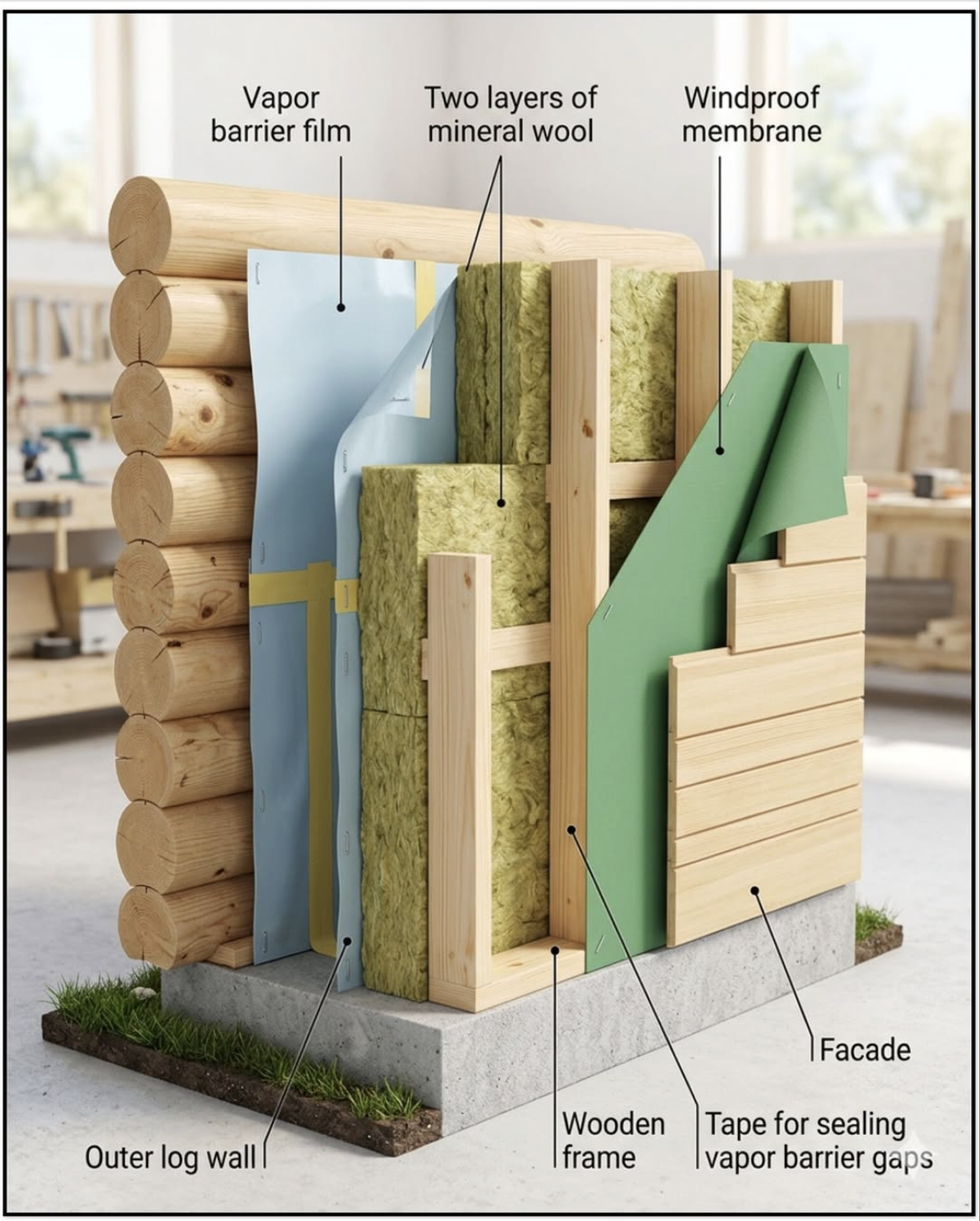
EPS (expanded polystyrene) is the familiar white or grey board often fitted to the outside of brick or concrete walls before the final render is applied. Mineral wool is another common choice - better fire and sound performance, but the right option depends on the wall and budget.
Increasing insulation from about 8 cm to 15 cm gives heat a much thicker barrier to cross. The boards must also fit together without gaps. Even thick insulation performs badly if heat can escape around missing pieces, concrete edges or poorly finished corners.
Why is this particularly important in Montenegro? Insulation works in both seasons. It addresses winter heating in inland and northern locations and summer cooling throughout the country.
| Additional cost | Estimated saving | Payback |
|---|---|---|
| ~€2,000 | ~1,800 kWh/year (~€270) | 7–8 years |
10. Better Roof Insulation
The roof is like a large lid over the house. In winter, a poorly insulated lid allows warmth to escape. In summer, roof tiles or a flat roof can become extremely hot and slowly heat the bedrooms below.
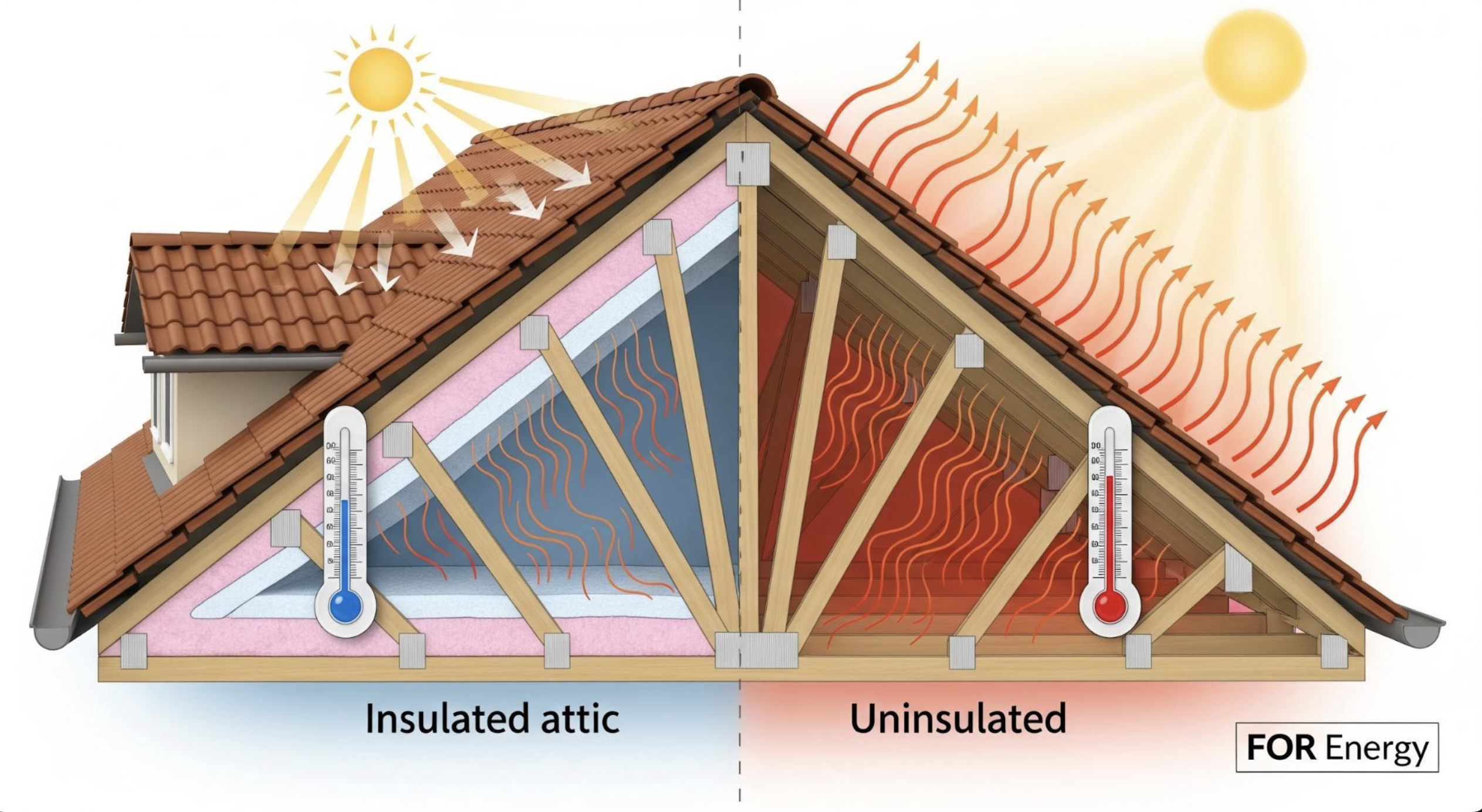
A thick, unbroken layer of insulation above the rooms slows heat in both directions. Pitched and flat roofs need different construction details, especially to keep rain and indoor moisture away from the insulation.
Why is this particularly important in Montenegro? Roof surfaces can reach very high temperatures under summer sun. Without adequate insulation, bedrooms below the roof often remain uncomfortable long after sunset.
| Additional cost | Estimated saving | Payback |
|---|---|---|
| ~€1,200 for upgrade | ~1,000 kWh/year (~€150) | ~8 years |
11. Eliminating Thermal Bridges
A thermal bridge is a small weak spot where heat finds an easier route through the wall. Imagine wearing a thick winter coat but leaving the zip open. The coat may be excellent, but warmth still escapes through the gap.
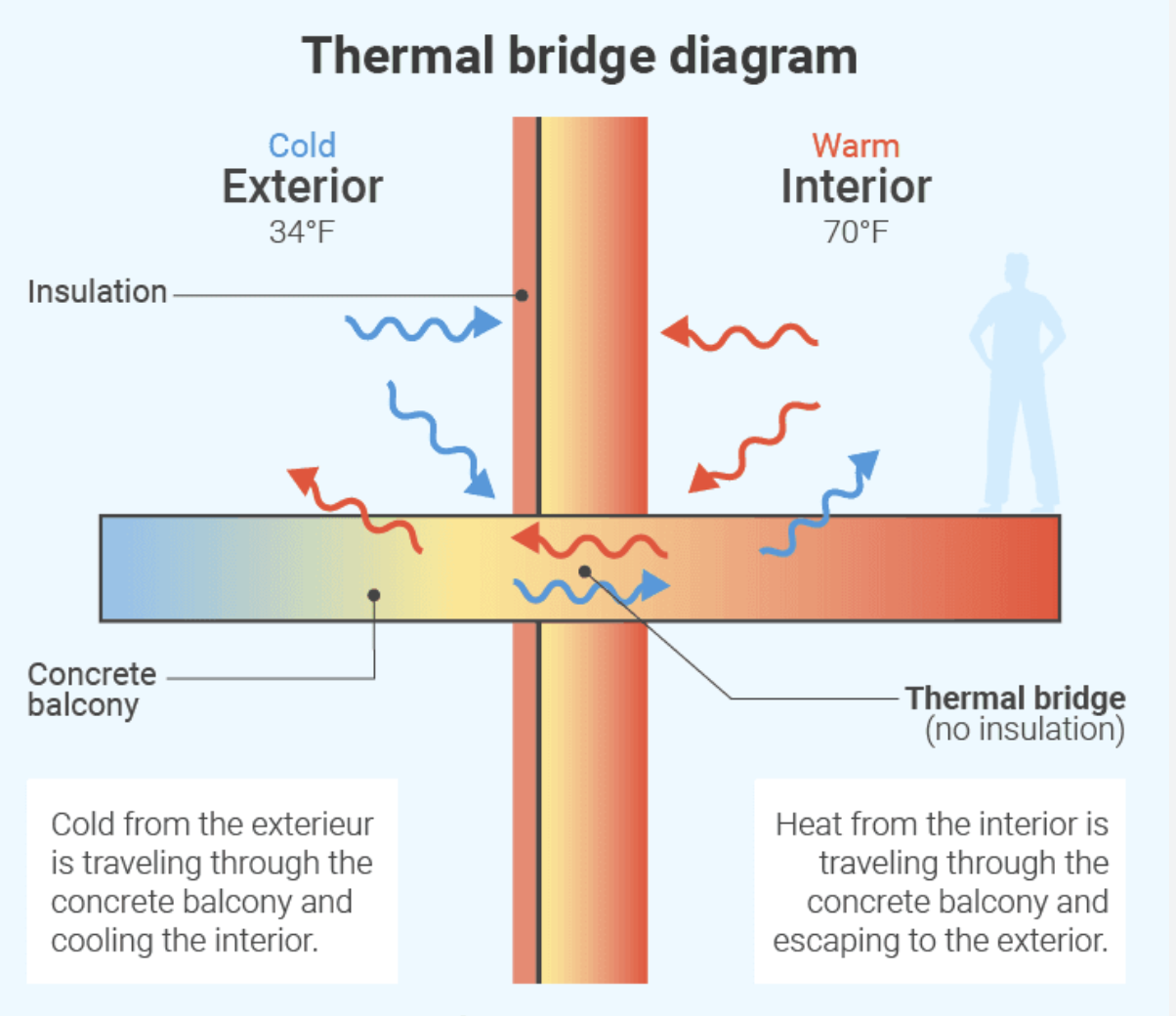
In a house, these weak spots often appear where a concrete balcony passes through an outside wall, or around concrete beams, columns, roof edges and windows. The solution is to keep the insulation layer unbroken wherever possible. Balconies may need a special insulated connector, and window frames should be installed close to the insulation.
Why is this particularly important in Montenegro? Reinforced-concrete frames and cantilevered balconies are common. If their junctions are not resolved during design, they are difficult and expensive to correct later.
| Additional cost | Estimated saving | Payback |
|---|---|---|
| ~€1,200 (highly detail-dependent) | ~650 kWh/year (~€100) | ~12 years |
12. Airtight Construction
Insulation slows heat moving through walls and roofs. Airtightness deals with a different problem: warm or cooled air escaping through tiny cracks.
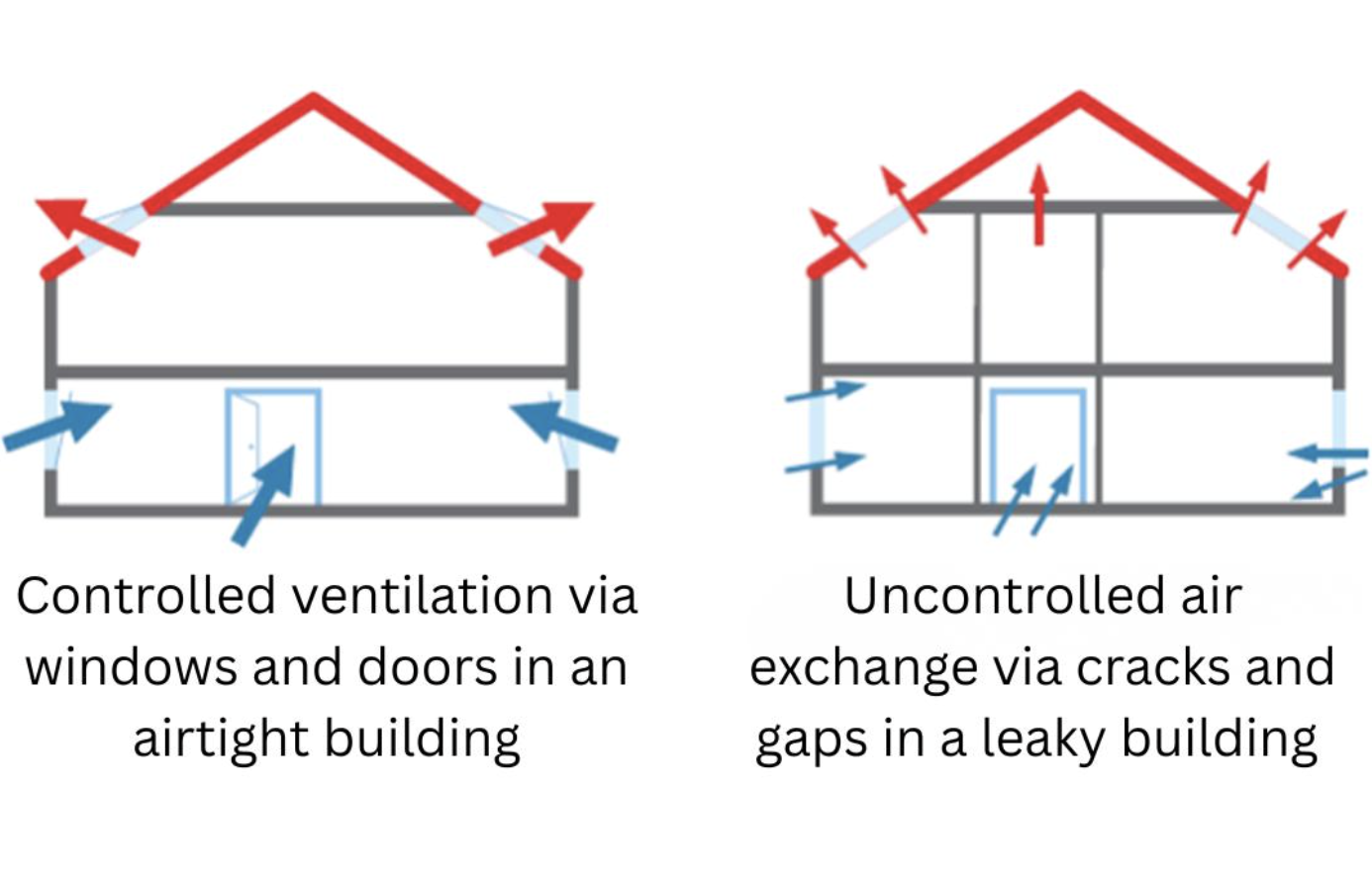
Those cracks often appear around windows and doors, where the roof meets the wall, or where pipes and cables pass through the construction. One gap may look harmless, but hundreds of small gaps can behave like leaving a window slightly open all year.
An airtight house is not a sealed box with no fresh air. Fresh air enters when and where you choose, through open windows or a planned ventilation system, instead of leaking randomly.
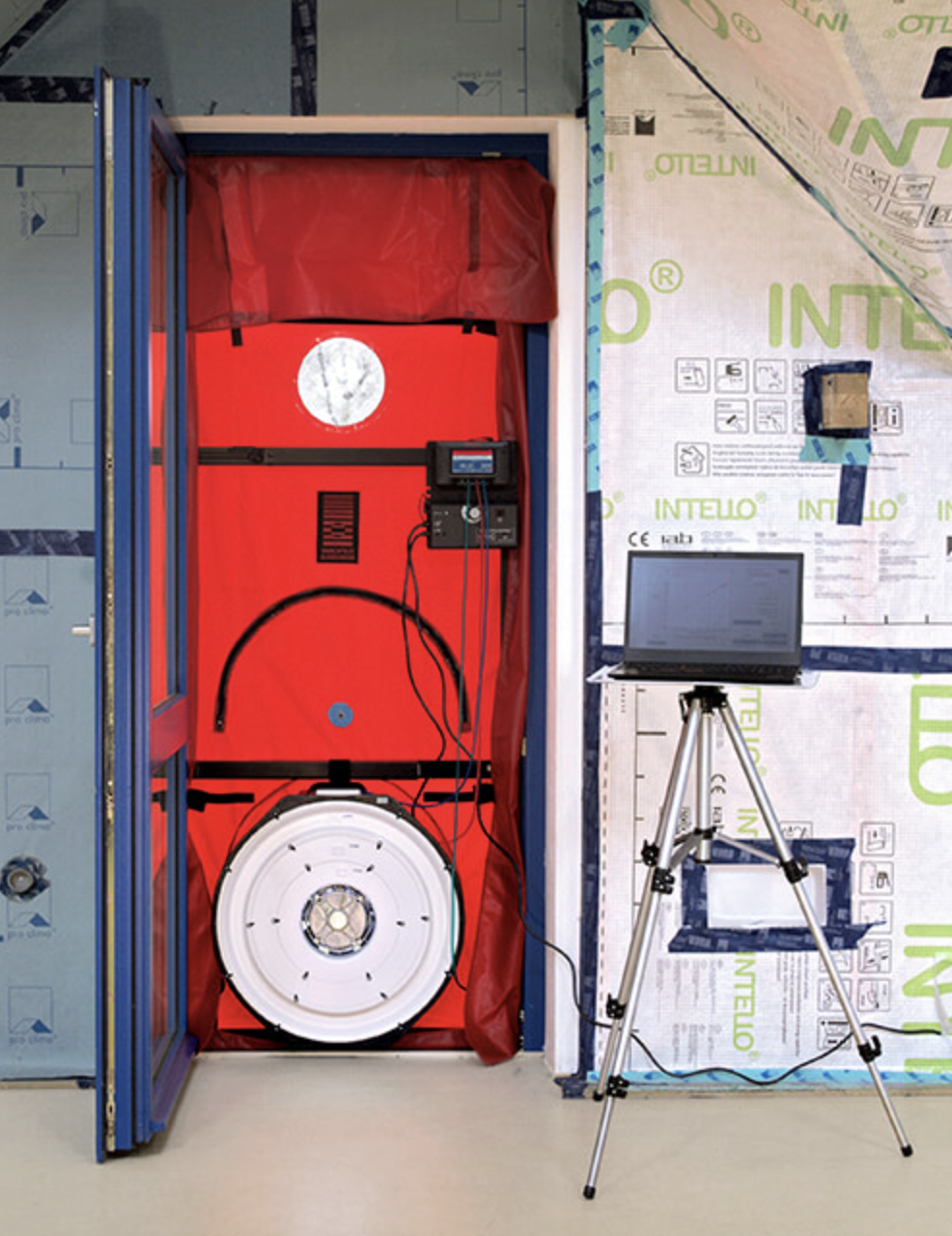
A blower-door test uses a temporary fan to measure leakage before the house is finished.
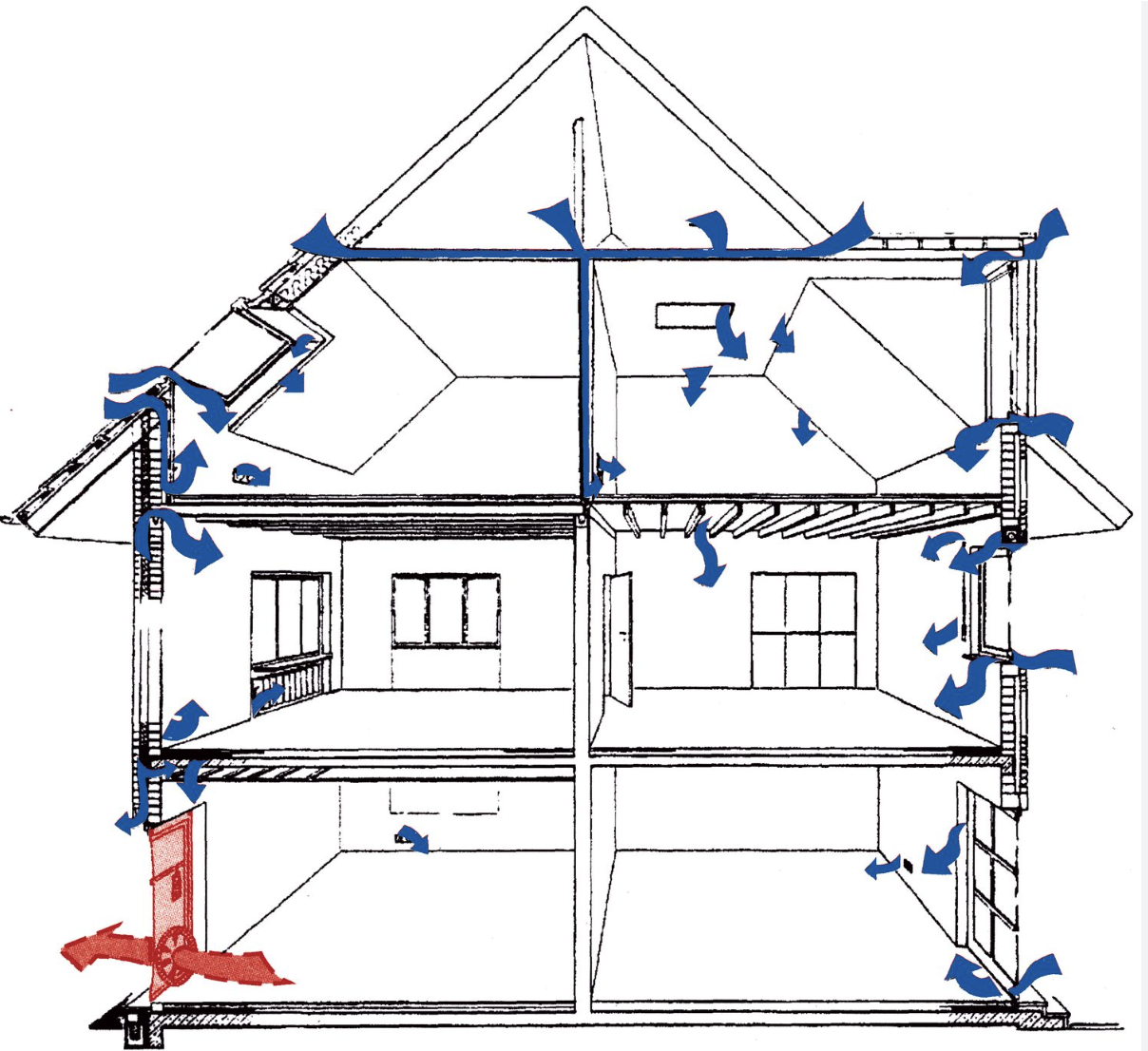
Why is this particularly important in Montenegro? Strong winds can expose leakage on coastal and elevated sites. Better sealing improves winter comfort and reduces summer humidity entering air-conditioned interiors.
| Additional cost | Estimated saving | Payback |
|---|---|---|
| ~€1,000 | ~700 kWh/year (~€105) | 9–10 years |
13. High-Performance Windows and Triple Glazing
Windows usually lose more heat than an insulated wall. Triple glazing adds a third sheet of glass, creating two sealed spaces filled with argon - a harmless gas that insulates better than air.
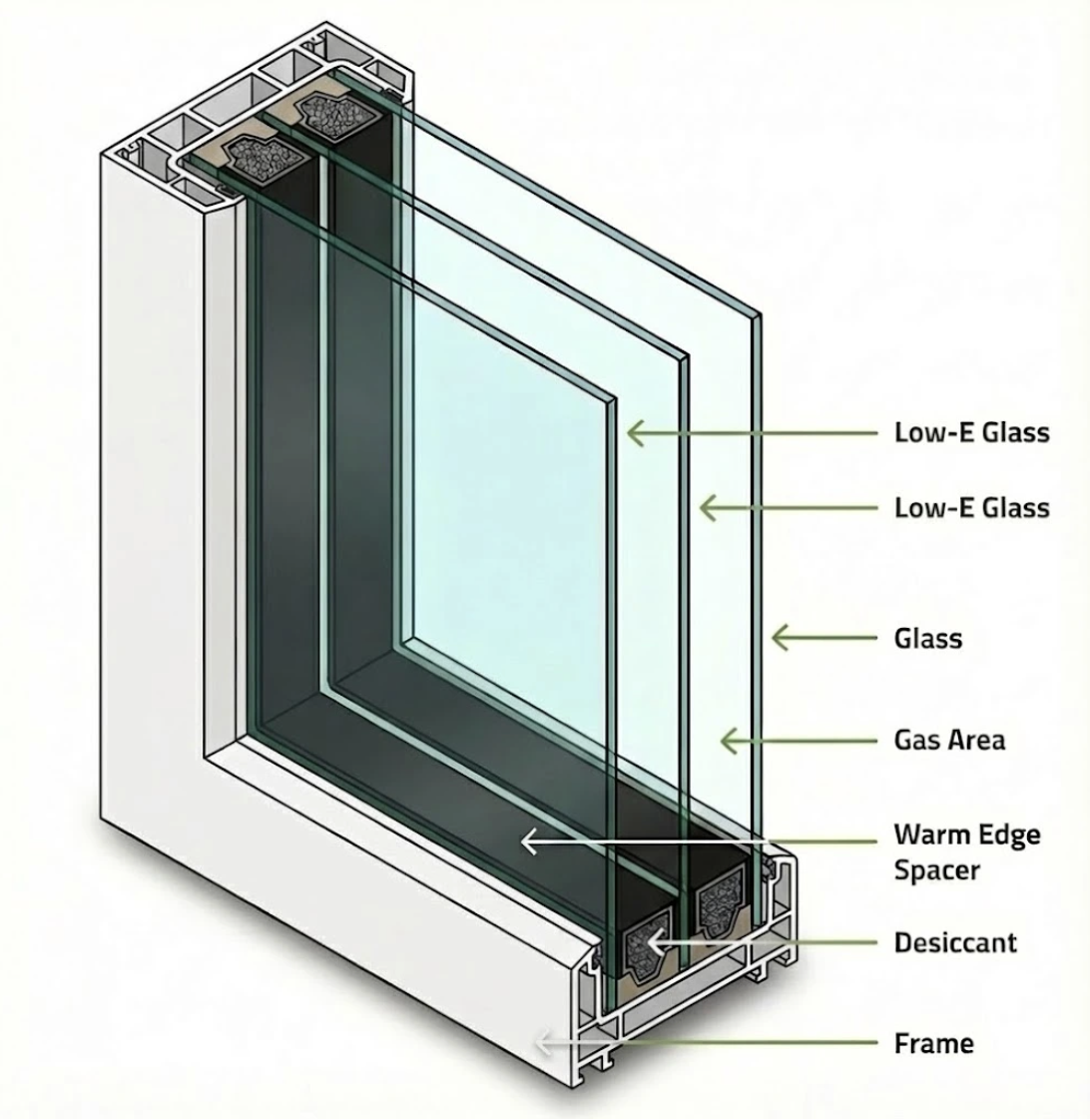
A nearly invisible low-emissivity coating on the glass can reflect indoor warmth back into the room in winter or reduce unwanted solar heat in summer. Insulated frames and better edge seals also matter.
The words "triple glazing" do not automatically guarantee a good window. Frame, installation, glass type, gas filling and external shading are equally important.
In many homes, excellent double glazing with the correct solar-control glass and good shading can offer better value than an average triple-glazed product.
| Additional cost | Estimated saving | Payback |
|---|---|---|
| €3,000–€4,000 above good double glazing | ~800 kWh/year (~€120) | 25–30 years |
Part 3 — Active Building Systems
Efficient systems and renewable energy should be added after passive demand has been reduced.
14. Heat Pump
A heat pump does not create most of its heat from electricity. It uses electricity to move heat that already exists from one place to another.
A refrigerator is a familiar example of the same principle. Food inside the refrigerator contains heat, even though it feels cold. The refrigerator collects that heat and releases it through the warm grille at the back. A heat pump uses this process in the opposite direction during winter - collecting heat from outdoor air (which contains energy even when it feels cold) and delivering it into the house.
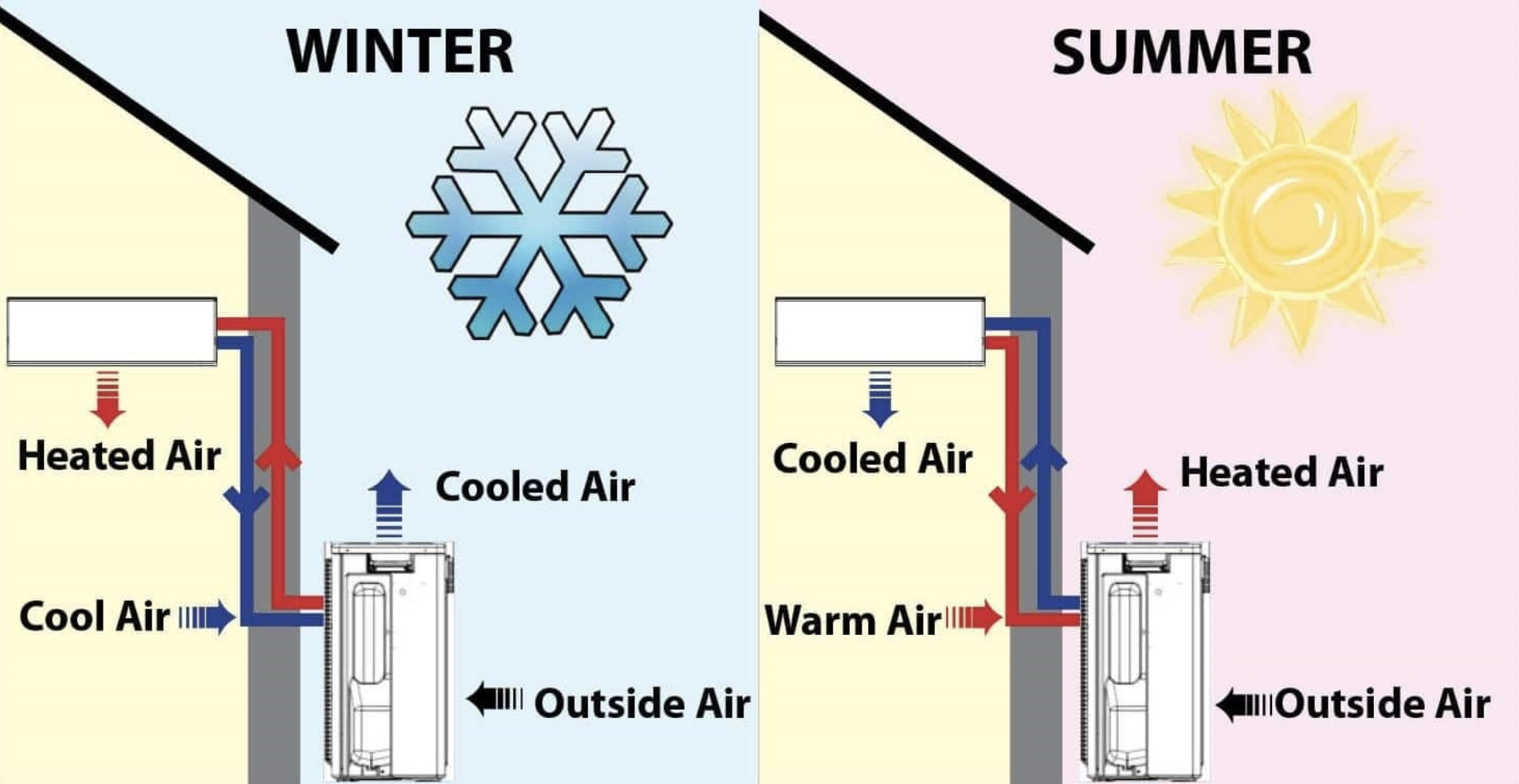
An air-to-water heat pump transfers this collected heat into water, which then circulates through underfloor pipes or low-temperature radiators. In summer, many heat pumps reverse direction and provide cooling.
A direct electric heater turns roughly 1 kWh of electricity into 1 kWh of heat. A well-designed heat pump can use the same 1 kWh to deliver 3 to 5 kWh of heat.
Why is this particularly important in Montenegro? Mild winters are favourable for air-source heat pumps. Performance is strongest in a well-insulated, airtight house with low-temperature heat distribution.
| Additional cost | Estimated saving | Payback |
|---|---|---|
| €6,000–€7,000 | ~4,000 kWh/year (~€600) vs. direct electric heating | 10–12 years |
15. Solar Water Heating
Solar water-heating panels use the sun to warm water for showers, sinks and kitchens. They are different from photovoltaic panels: photovoltaic panels make electricity, while solar thermal panels collect heat.
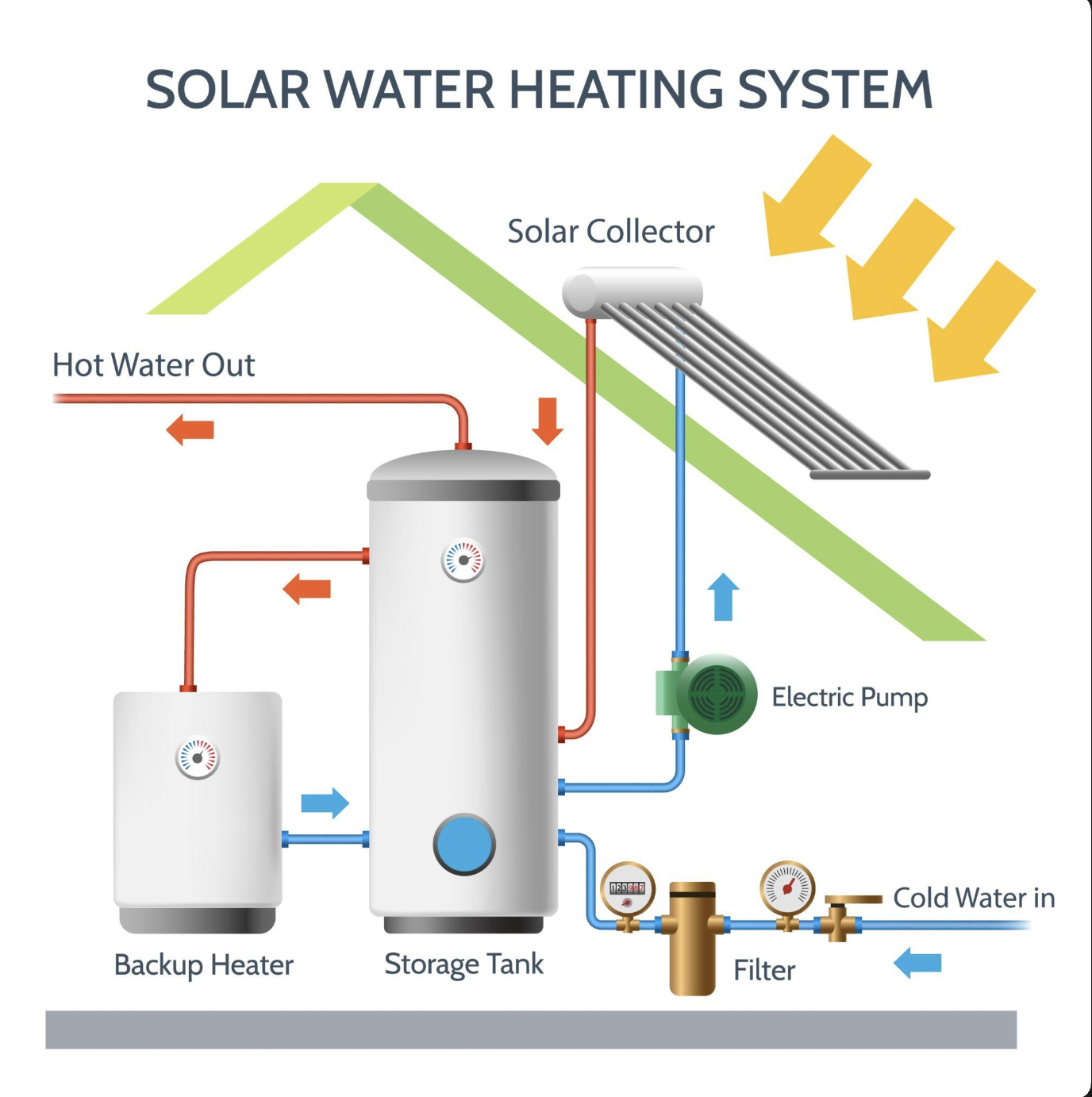
Water circulates through the roof collectors, where it is heated by the sun before carrying that heat to an insulated storage tank. On cloudy days, an electric heating element or a heat pump provides any additional heating needed.
The system should be sized for the family's real hot-water use. Installing too many collectors can create more heat than the household can use during summer.
Why does it save energy? Water heating commonly represents 15–25% of household energy use. Solar thermal replaces part of the electricity or fuel that would otherwise heat that water.
Why is this particularly important in Montenegro? Montenegro enjoys abundant sunshine throughout the year, especially during summer, when households and tourist accommodation also use the most hot water. This makes solar thermal systems particularly effective, as they produce the most energy precisely when demand is highest.
| Additional cost | Estimated saving | Payback |
|---|---|---|
| ~€2,000 | ~1,300 kWh/year (~€195) | ~10 years |
16. Solar Electricity Panels
Photovoltaic (PV) panels turn sunlight into electricity. Throughout this guide, we use a 5 kW residential solar system as an example. The 5 kW rating represents the system's maximum power output under ideal test conditions, not the amount of electricity it produces continuously. In practice, the actual output changes throughout the day depending on sunlight, weather and the season.
A modern 5 kW installation commonly uses 10–12 panels. The home uses the electricity while it is being produced; unused power may be sent to the grid or stored in a battery. An inverter converts panel DC electricity into the AC used by household appliances.
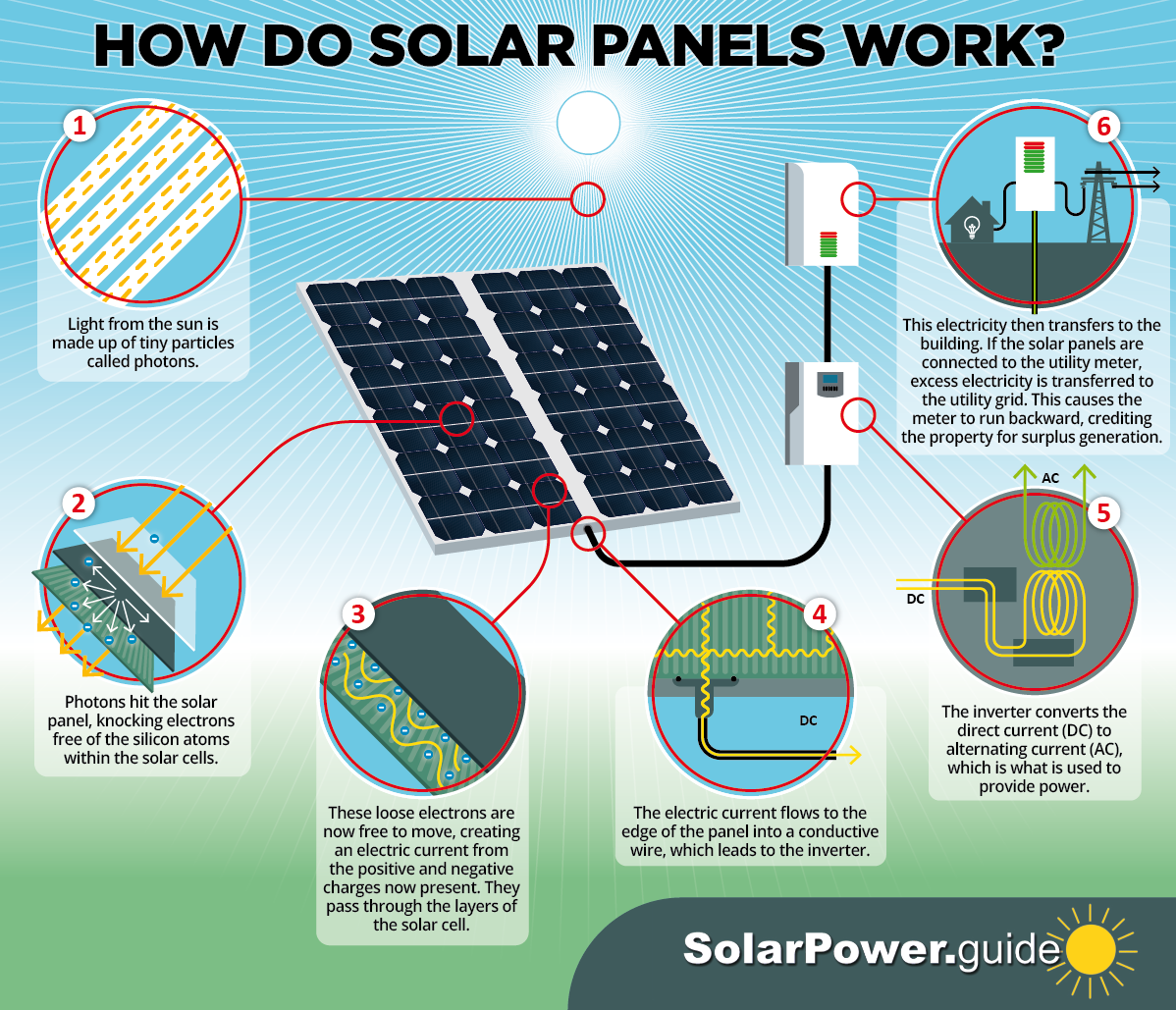
A simple roof with a large sunny area is easier and cheaper to equip than a complicated roof interrupted by chimneys, dormers and many different slopes. Planning for solar panels during the architectural design can therefore save money later.
Without a large battery, a typical family may directly use around 30–40% of solar electricity and send the rest to the grid. Electricity exported to the grid is usually credited at a lower value than electricity purchased from it — which is why annual financial savings are lower than simply multiplying total production by the retail electricity price.
Why is this particularly important in Montenegro? A well-sited 5 kW system in Podgorica can realistically generate 6,500–7,500 kWh of electricity per year. In addition, Montenegro's state-owned electricity company, EPCG, periodically offers highly subsidised residential solar panel programmes, making photovoltaic systems significantly more affordable for homeowners and further improving their financial return.
| Additional cost | Estimated saving | Payback |
|---|---|---|
| €6,000–€7,000 | 6,500–7,500 kWh generated; ~€600–€800/year saved | ~8–12 years (significantly shorter with government subsidies) |
17. Mechanical Ventilation with Heat Recovery (MVHR)
MVHR is a whole-house fresh-air system. It sends filtered outdoor air to bedrooms and living rooms while removing humid or stale air from bathrooms, kitchens and utility spaces.
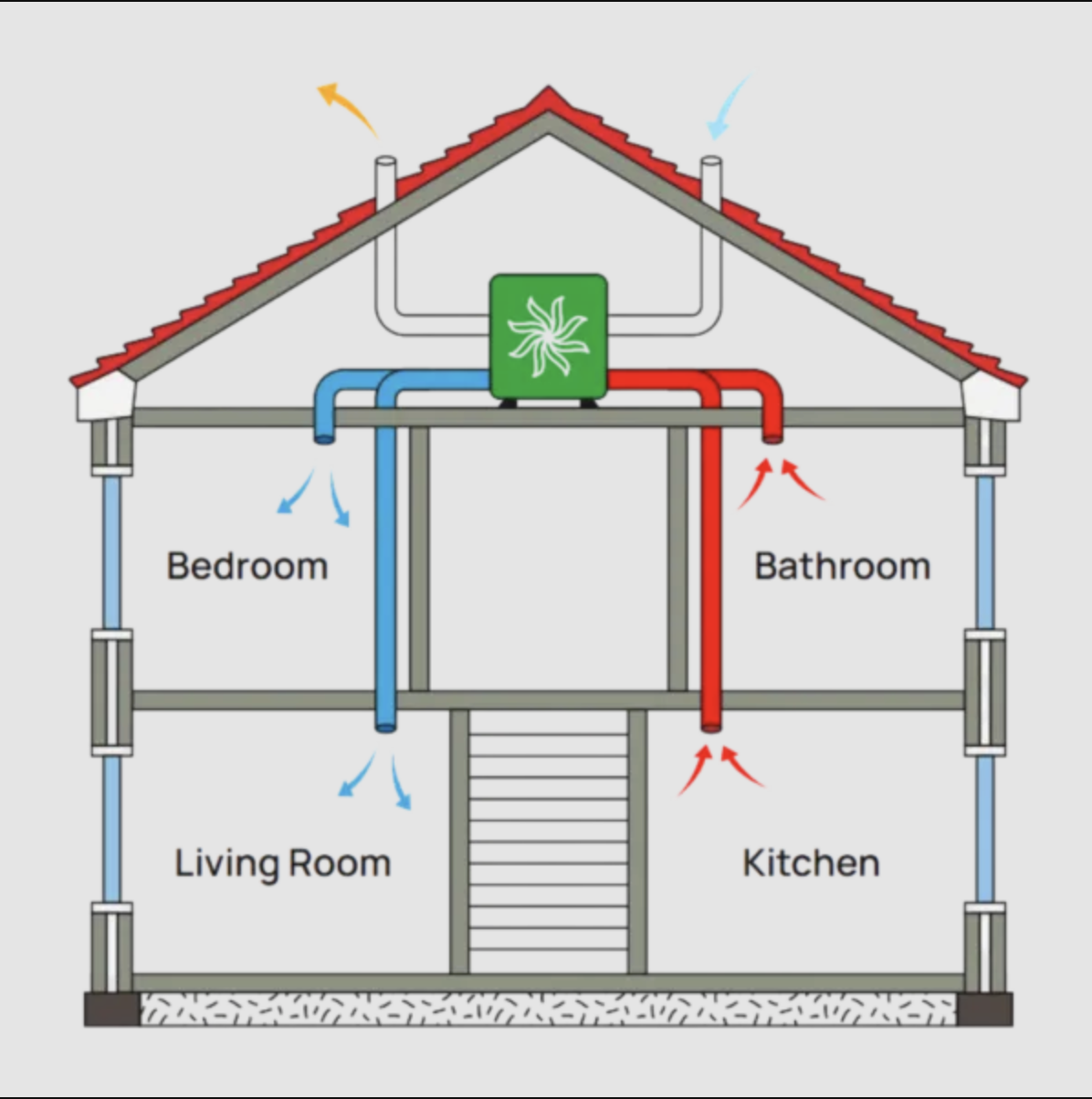
The clever part: the outgoing warm air passes beside the incoming cold air inside a heat exchanger. The two air streams do not mix, but much of the warmth moves from one to the other. The home gets fresh air without throwing away most of the heat it has already paid for.
The system needs hidden ducts, a central unit and accessible filters. It must be planned before construction, adjusted after installation and maintained by replacing filters. It works best when the rest of the house is airtight.
Why does it save energy? MVHR can recover roughly 80–90% of that heat while providing controlled fresh air.
Why is this particularly important in Montenegro? Valuable for airtight homes, allergy-sensitive families, noisy or polluted locations, and households that want consistent air quality without leaving windows open.
| Additional cost | Estimated saving | Payback |
|---|---|---|
| €3,000–€5,000 | ~1,200 kWh/year (~€180) | 17–28 years |
18. Rainwater Harvesting
Instead of sending all roof water directly to the drain, a rainwater system catches it and stores it in a tank. The water can then be used for the garden, washing cars and outdoor surfaces, or with the right plumbing, flushing toilets and washing clothes.
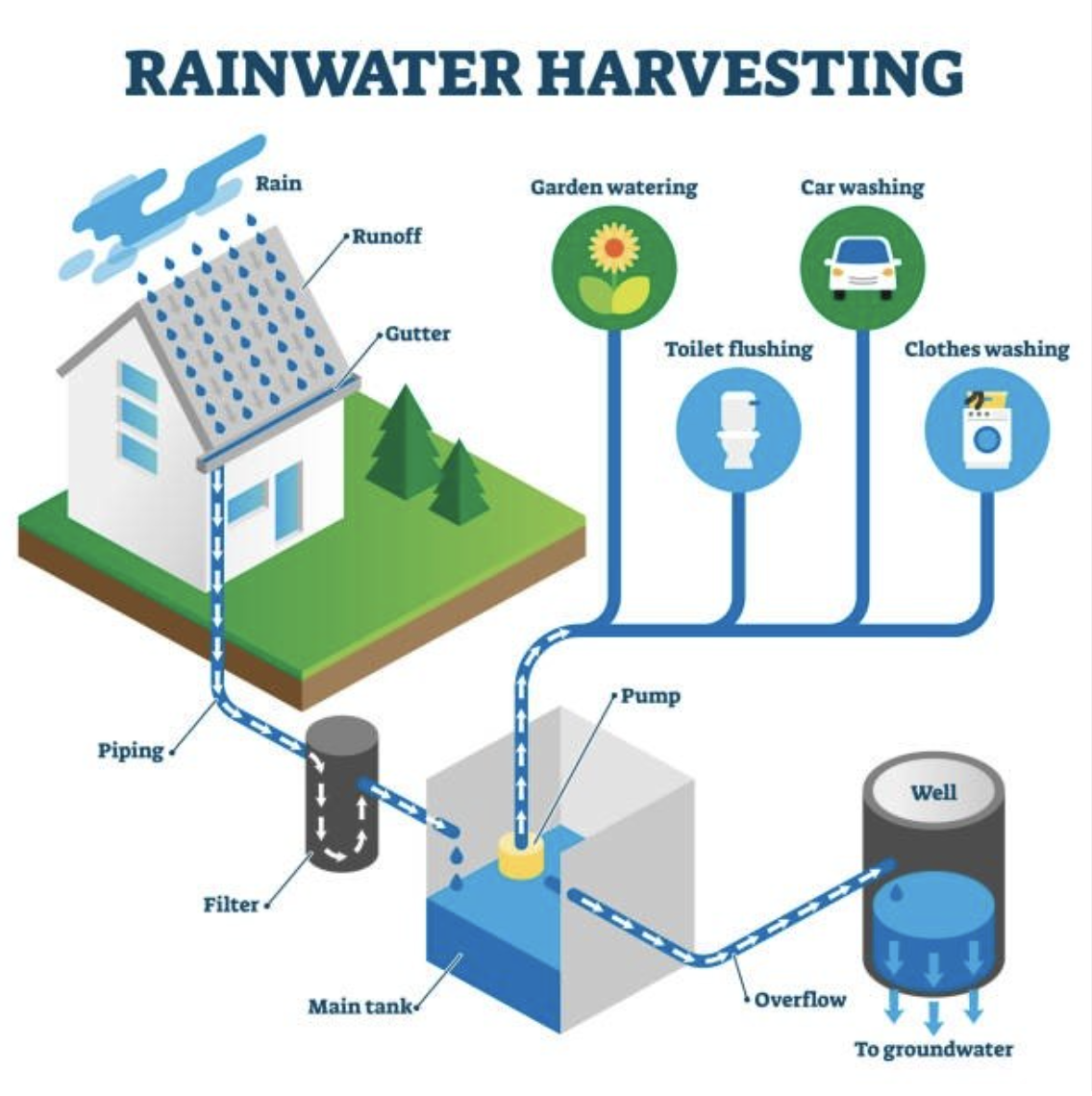
The first dirty water after a long dry period should be diverted away from the tank. Leaves and debris must be filtered out, and the tank needs a safe overflow when it becomes full.
Rainwater pipes must remain clearly separated from drinking-water pipes.
Why is this particularly important in Montenegro? Long dry summers and intense seasonal rainfall make storage useful for gardens and resilience.
| Additional cost | Estimated saving | Payback |
|---|---|---|
| €2,000–€3,000 | ~€50–€100/year | 20–60 years |
Part 4 — Long-Term Sustainability
A sustainable house should continue performing well with fewer repairs and replacements over many decades.
19. Designing for Low Maintenance
Sustainability includes designing a house that needs fewer repairs, replacements and disruptive interventions. Each repair uses new materials, transport, labour and creates waste.
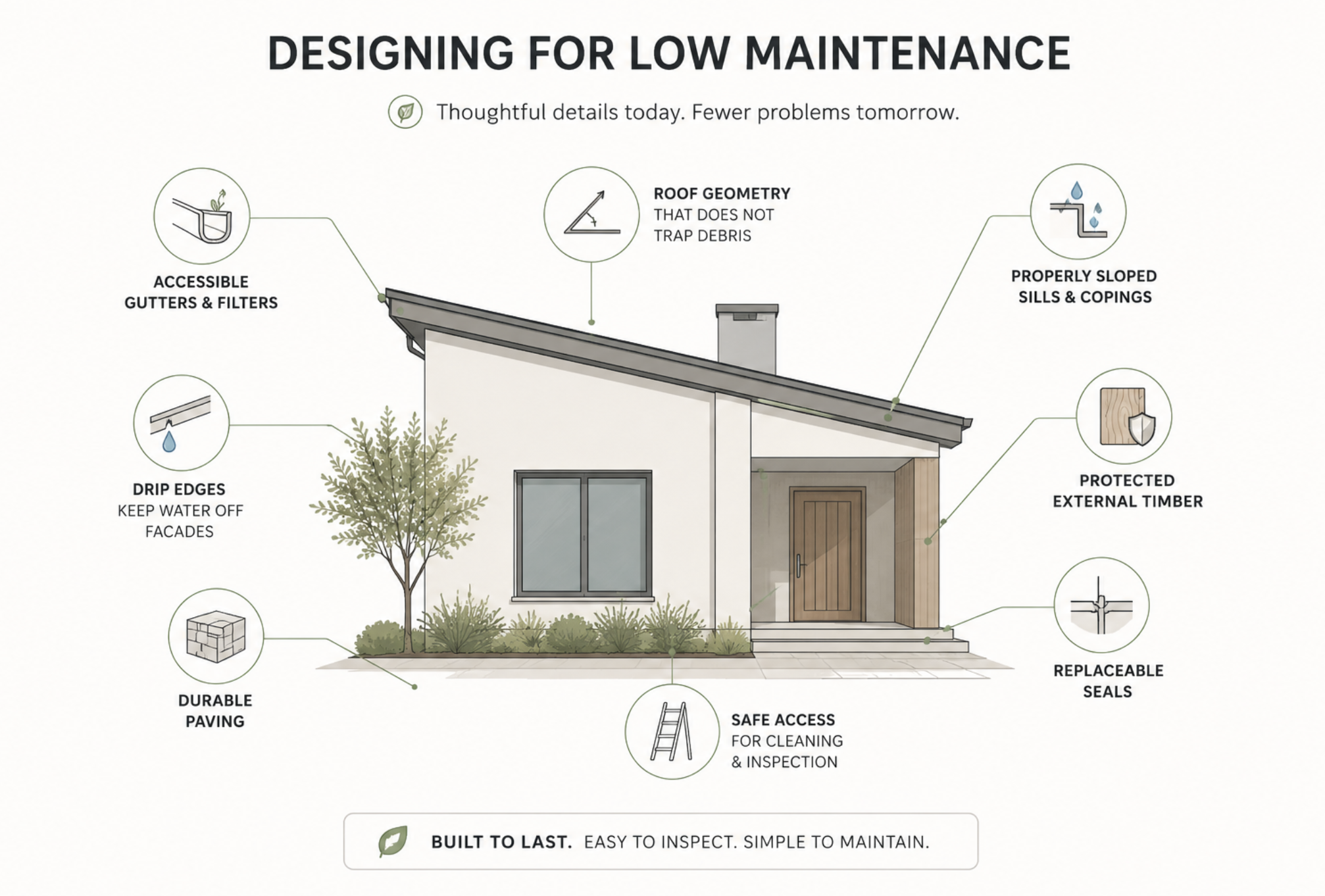
Low-maintenance design means accessible gutters and filters, roof geometry that does not trap debris, properly sloped sills and copings, drip edges that keep water off façades, protected external timber, replaceable seals, safe access for cleaning and durable paving.
This does not mean choosing the most expensive material everywhere. It means choosing details suited to the exposure and ensuring vulnerable components can be inspected, cleaned and replaced without dismantling half the building.
Why is this particularly important in Montenegro? Intense sun, heavy rain, mountain freeze-thaw conditions and coastal salt can rapidly expose weak details.
| Additional cost | Estimated saving | Payback |
|---|---|---|
| Usually €0–€500 in better detailing | Often €5,000–€15,000 avoided over 30–50 years | Immediate to long-term |
Summary Table - All 19 Measures at a Glance
| Sustainability measure | Additional cost | Estimated annual saving | Payback |
|---|---|---|---|
| 1. Proper house orientation | €0 | €126 | Immediate |
| 2. Room orientation | €0 | €108 | Immediate |
| 3. Smart planning & compact design | Reduces construction cost | €108 | Immediate |
| 4. Cross ventilation | €0–€300 | €75 | Immediate to 4 years |
| 5. Daylighting | €0–€500 | €45 | Immediate to 11 years |
| 6. Overhangs, pergolas & terraces | €1,500–€2,500 | €60 | 25–42 years |
| 7. Trees & climate-responsive landscape | €300–€700 | €38 | 15–20 years |
| 8. Façade colour & materials | €0 to premium uplift | €45–€75 | Immediate to project-specific |
| 9. Better wall insulation | €2,000 | €270 | 7–8 years |
| 10. Better roof insulation | €1,200 | €150 | ~8 years |
| 11. Eliminating thermal bridges | €1,200 | €100 | ~12 years |
| 12. Airtight construction | €1,000 | €105 | 9–10 years |
| 13. High-performance windows / triple glazing | €3,000–€4,000 | €120 | 25–30 years |
| 14. Heat pump | €6,000–€7,000 | €600 | 10–12 years |
| 15. Solar water heating | €2,000 | €195 | ~10 years |
| 16. Solar electricity (5 kW) | €6,000–€7,000 | €600–€800 | ~8–12 years (significantly shorter with government subsidies) |
| 17. MVHR | €3,000–€5,000 | €180 | 17–28 years |
| 18. Rainwater harvesting | €2,000–€3,000 | €50–€100 | 20–60 years |
| 19. Low-maintenance design | €0–€500 | €5,000–€15,000 lifetime | Immediate to long-term |
Which Measures Give the Best Return?
-
Highest priority (free design decisions). Orientation, room placement, compact planning, cross ventilation and daylighting should be resolved first. They cost little or nothing during concept design and become difficult to change once construction begins.
-
Excellent financial return. Wall and roof insulation, airtightness, a correctly designed heat pump and solar PV can offer strong financial returns while improving comfort.
-
Mainly comfort investments. Overhangs, pergolas, landscape design, high-performance glazing and MVHR often justify themselves through better summer comfort, quieter interiors, healthier air and more usable outdoor space.
-
Long-term sustainability investments. Rainwater harvesting and low-maintenance detailing may deliver their main value over decades - resilience, reduced water use, fewer failures and fewer replacement cycles.
How Much Can a Well-Designed House Save?
No single measure transforms a house on its own. The benefit comes from combining strategies that support one another: good orientation, compact planning, effective shading, natural ventilation, a strong envelope, efficient systems and renewable energy.
For the reference house, combining the design strategies presented in this guide can reduce annual heating and cooling costs by approximately €1,100–€1,400, lowering the baseline annual energy bill of around €1,800 by roughly 60–80%.
Adding a photovoltaic (PV) system to generate part of the home's electricity for lighting, appliances and building systems can increase the total annual savings to approximately €1,600–€2,400.
The greatest benefits come from integrating multiple strategies into a single, well-designed house - not by simply adding together the estimated savings of individual measures.
The 10 Most Common Sustainability Mistakes Homeowners Make
-
Thinking solar panels solve poor architectural design. No amount of technology fully compensates for poor orientation, excessive unshaded western glazing or an inefficient floor plan. Reduce demand first, then add technology.
-
Building a larger house than the family needs. Every unnecessary square metre costs money to build, heat, cool, furnish and maintain.
-
Ignoring the movement of the sun. Matching each room to the time of day it is used improves comfort without increasing construction cost.
-
Forgetting external shading. External shading stops heat before it crosses the glass and is much more effective than relying only on internal curtains.
-
Choosing dark façades without considering exposure. Dark finishes absorb more solar radiation.
-
Treating landscaping as decoration only. Trees and planting should be an integral part of your home's climate strategy, not just decorative features in the garden.
-
Saving money by reducing insulation or workmanship. Cutting thickness or accepting gaps can create higher bills and comfort problems for decades.
-
Focusing only on upfront construction cost. Consider the whole-life cost, not just the upfront construction cost. Lower initial costs can result in higher maintenance, repair and energy expenses over time.
-
Forgetting maintenance access. Inaccessible gutters, filters and roof valleys are more likely to be neglected.
-
Choosing an architect based only on price. One good planning, orientation or detailing decision can save many thousands of euros over the life of a home.
The Most Important Lesson
Sustainable architecture is not primarily about technology. Solar panels, heat pumps and sophisticated ventilation systems are valuable, but they should not be used to compensate for poor design.
A poorly oriented house with excessive unshaded west-facing glazing will still overheat. A house with unnecessary floor area will always cost more to build, heat and maintain. Good sustainability begins with the first sketch.
Final Thoughts
The most sustainable homes are rarely the most complicated. They are the homes where every decision has been made with intention. The building works with the climate. The sun provides warmth when it is welcome and shade when it is needed. Natural breezes cool the interior before air conditioning is considered.
Every family lives differently. Every plot is different. There is no universal formula for a sustainable house - a solution that works perfectly on one plot may perform very differently on another because of orientation, neighbouring buildings, surrounding trees, prevailing winds, topography or the lifestyle of the family who will live there.
That is why truly sustainable architecture is never copied blindly from another project. It is designed around the specific site, climate, budget and people who will call it home.
Planning a house in Montenegro? We can help you create a home that is beautiful, comfortable, energy-efficient and designed to perform well for decades. Get in touch to discuss your project.